Archives: Archived Performances

  • Samlingen

    Samlingen

    Cullberg Ballet in cooperation with choreographers Amanda Apetrea, Nadja Hjorton, Stina Nyberg, Halla Ólafsdóttir, Zoë Poluch and Dansmuseet present

    Samlingen

    “Can we dance the exhibition instead of exhibit the dance?”

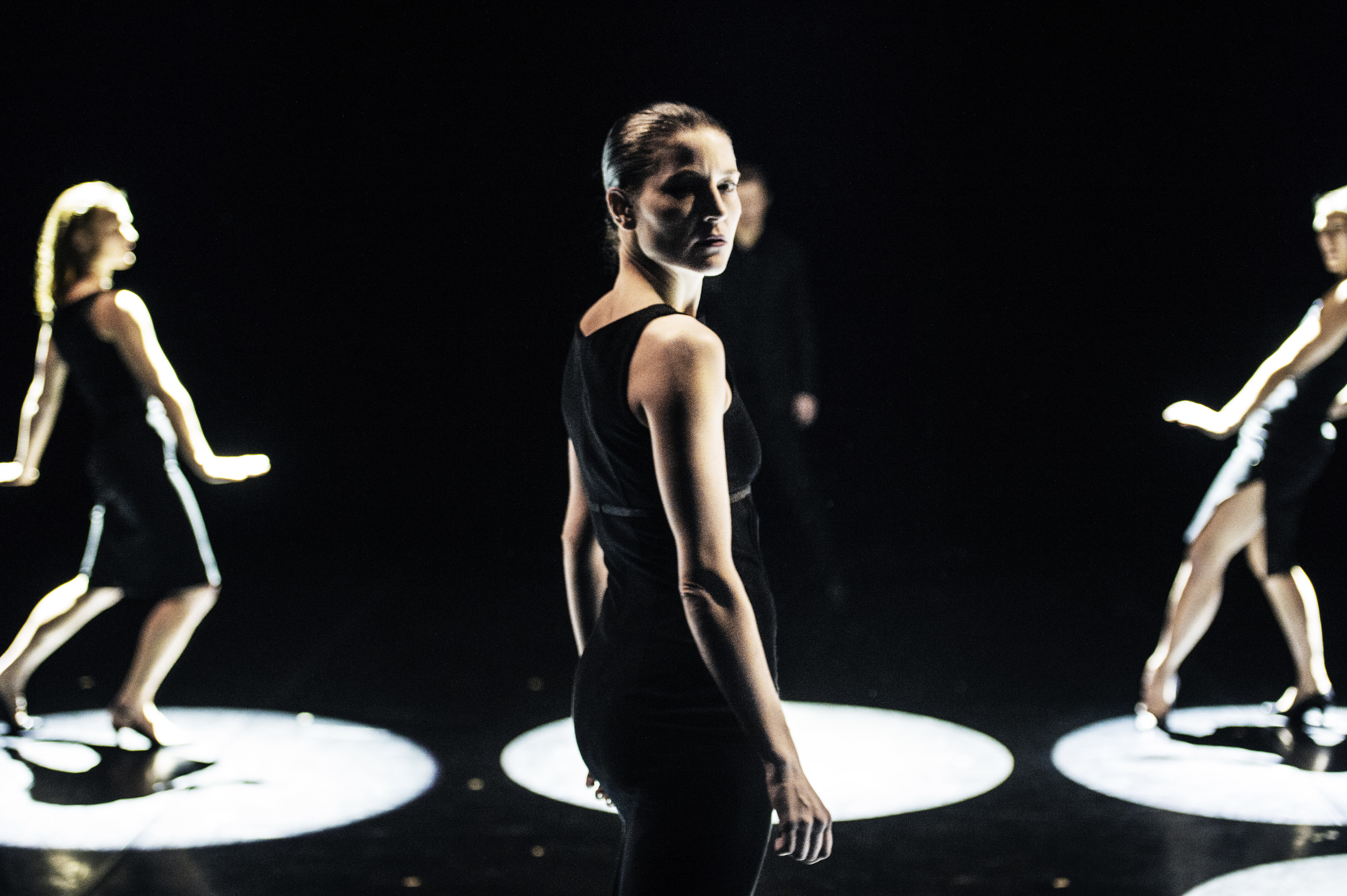
    Among the costumes, treasures, dolls, literature and paintings from around the world five choreographers and nine dancers from Cullberg Ballet occupy Dansmuseet (The Museum of Dance) over the course of two weeks. Presented in the work are stories about dance, choreography, personalities and politics, something Samlingen attempts to view with a new perspective.

    Utilizing the treasures of the museum as a starting point they take a deep dive into history, coming back imprint an impression on our contemporarysensibility and point of view. Collectively, Samlingnen and Cullberg create a new collection for the museum – a danced exhibition.

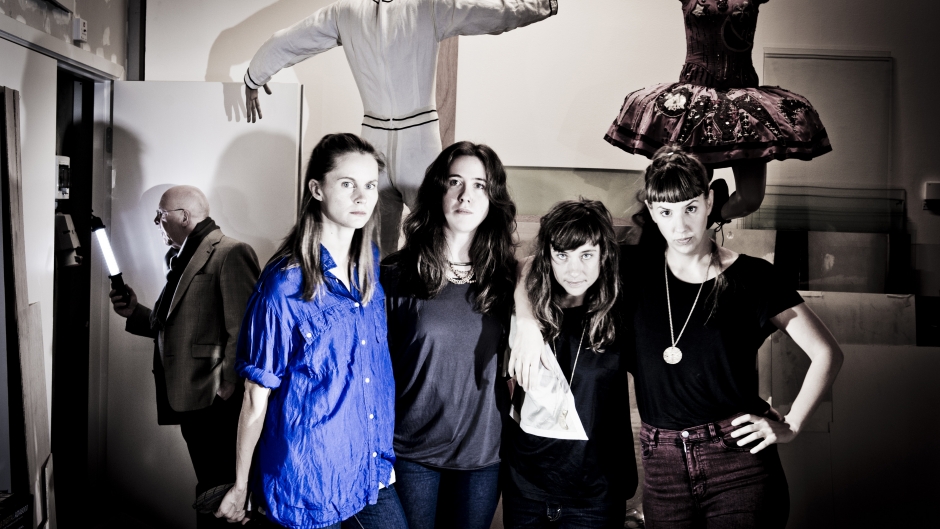
    About Samlingen: Samlingen is Amanda Apetrea, Nadja Hjorton, Halla Ólafsdóttir, Stina Nyberg and Zoë Poluch. In this collaboration between five choreographers who share a feminist approach to choreography we deal with the history and herstory of dance. Samlingen was initiated as a choreographic project to facilitate their common interest in choreography, friendship and feminism as it is intertwined with the history of dance. Samlingen has done work for Cullberg Ballet, Kulturhuset/Stadsteatern, Stockholm and was keynote speakers at the Postdance conference at MDT, Stockholm.
  • In House

    In House marked the dancers of Cullberg once again presenting their present their own, this time at Riksteatern, Stockholm.

    The evening featured dance in motorcycle helmets, video installations, visual art, and a new version of Hamlet.

    The Icelandic choreographer Margrét Sara Gudjónsdóttirs international audience success Soft Target will be presented in a new version titled Targeted created for three of the company’s dancers.

    Former Cullberg Ballet dancer, Canadian Hanako Hoshimi-Caines, returned to Sweden to present a new creation I read fiction to keep it real.

    Works included:

    • Targeted by Margrét Sara Gudjónsdóttir
    • I read fiction to keep it real av Hanako Hoshimi-Caines
    • Shoe on the fire by Eva Mohn
    • Bend by Daniel Sjökvist
    • Start=Stop by Adam Schütt
    • Sisters by Samuel DraperMel Brooks meets Kenneth Branagh by Jac Carlsson
    • Encuentro Me (I meet Me) by Patricia Vázquez
    • Transmission Continuity by Gesine Moog
  • Playback

    An interactive performance between the public and dancers.

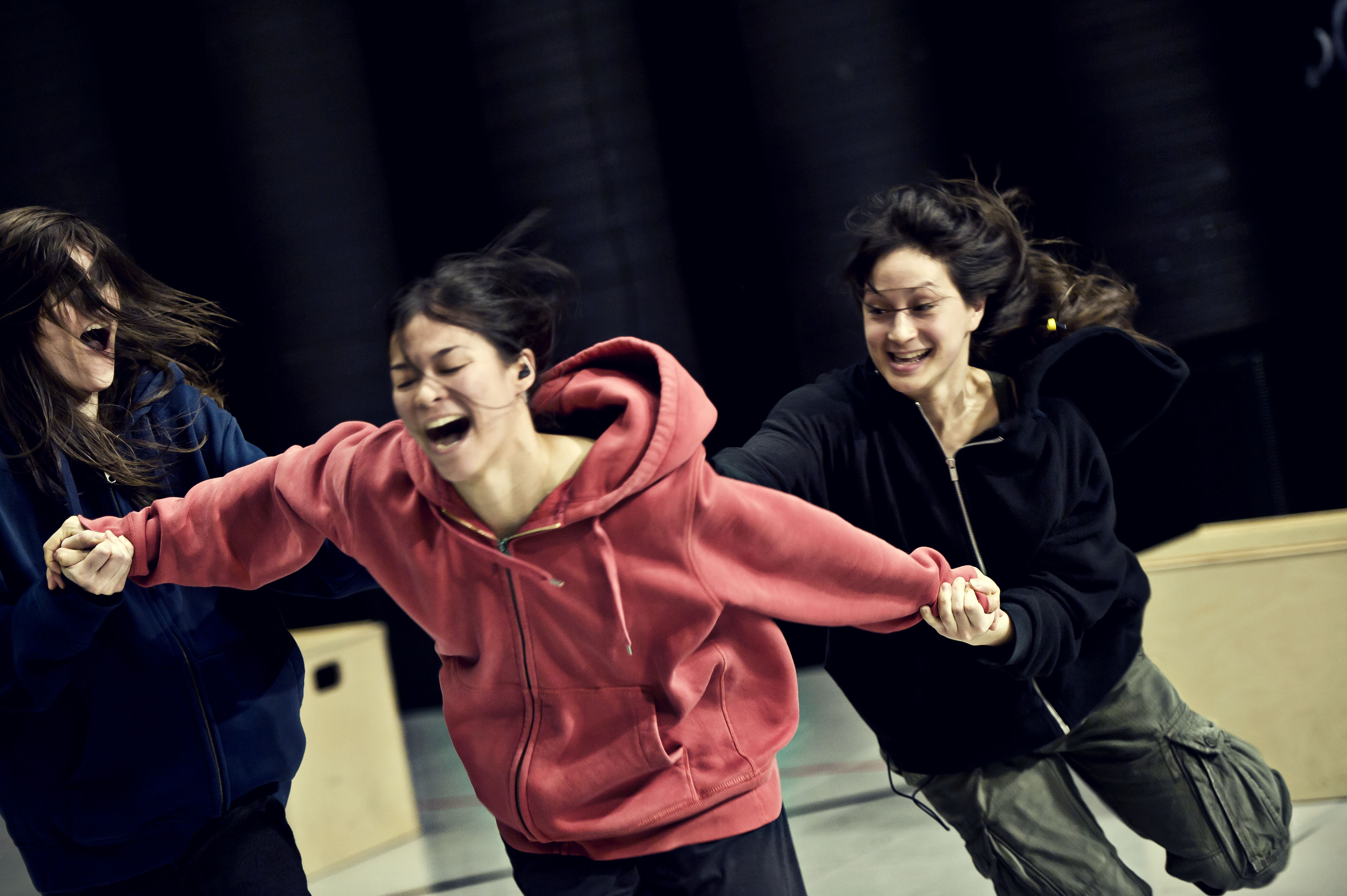
    Cullberg’s Playback format provides a framework for the audience to choose the themes and types of movement that will happen onstage. The dancers improvise around these choices, allowing for new and unforeseen constellations and actions to appear, co- created by audience and dancers alike.

    The first Playback was presented in Santiago, Chile in January 2012. Thereafter it was performed numerous times in Sweden and abroad, including a school tour in Norrbotten and on the island of Gotland.

  • JJ’s voices

    JJ’s voices

    In November of 2009, the Cullberg Ballet made its debut on the small stage at Dansens Hus, with renowned Canadian choreographers Crystal Pite and Benoît Lachambre.

    JJ’s Voices (2009) was the first piece created for the Cullberg ballet by the French Canadian choreographer, artist, improviser and artistic director of Par B.L.eux. Montreal, Benoît Lachambre. The piece was inspired by the voice and music of Janis Joplin, and the dancers bore out her songs through their bodies. JJ’s Voices spent three years in the Cullberg’ repertoire as a great success on the international touring circuit.Benoît Lachambre has been a part of the international dance scene for more than thirty years and has in that time devoted himself to the rigorous exploration of movement and dance. At the intersection of dance, performances and visual art, Lachambre / Par B.L.eux create interdisciplinary choreographic works and collaborate closely with other artists around the world. Benoît Lachambre has appeared in a number of films and has received several awards for his work including the Jacqueline Lemieux Award from the Canada Council in1999 and two Dora Mavor Moores awards for best performance and best choreography in 2001. He also won the prestigious Bessie Award in 2006 for Forgeries, Love, and Other Matters.

  • Reproduction (2015)

    Reproduction (2015)

    In the history of dance the communication between dancer and audience has fascinated a lot of choreographers, dance makers and dancers. What is defining the communication between the one who dances and the one who watches? In the last century the gaze of the audience is seduced, triggered, directed and manipulated by choreographers.

    Choreographer Eszter Salamon questions the power of the gaze of the dancer and audience, and at the same time she questions the performative body. Is what we see what we get? Is the body a construction of our desire or our fears? What do we expoe by exposing our body to the gaze of someone else?

    Eszter Salamon is active as both dancer and choreographer and her works appear frequently in theatres and venues in Europe, the US and in Asia. For Cullbergbaletten, she has recreated her work Reproduction from 2004.

    Eszter Salamon has created solos such as What a Body You Have, Honey (2001) and Giszelle (2001) in collaboration with Xavier Le Roy. Salamon has also created Magyar Tàncok (2005) with Hungarian folk dancers and musicians. Nvsbl (2006), a choreography for film in collaboration with Bojana Cvejic, AND THEN (2007), and together with Arantxa Martinez, concert performance Without You I Am Nothing (2007) with Lukas Minkus and Ramon Pozo. Dance #1/Driftworks (2008), in collaboration with Christine De Smedt, Voice Over (2009), a piece ordered and interpreted by Christina Rizzo, Dance for Nothing (2010) and together with Peter Böhm, Bojana Cvejic and Cédric Dambrain Tales of the Bodiless (2011).

    Reproduction (2015)

    Duration 65 minutes, no intermission
    Dancers 8 dancers

  • 11th Floor

    11th Floor

    World renowned choreographer Edouard Lock created 11th Floor directly for Cullberg Ballet. The piece was inspired by jazz and film noir of the nineteen fifties and focused on an unspoken crime of passion coupled with unstable relations and repressed tensions.

    With music written specially by Gavin Bryars and costumes by Ulrika van Gelder, 11th Floor is an elegant and sophisticated period piece featuring ten dancers. Composer, jazz musician and bassist Gavin Bryars has created music in a wide variety of styles including jazz, free improvisation, minimalism, historicism, experimental music, avant-garde and neoclassicism. He has created music to several operas, string quartets, concertos, as well as choral music. He has collaborated with many choreographers and directors including Edouard Lock, Merce Cunningham and Robert Wilson, among others.

    Edouard Lock began choreographing at the age of twenty, and has made several works for various companies in Canada. Lock founded his own company La La La Human Steps in 1980 in Montréal and the company had great international success with large scale dance productions. The award winning Lock had his international breakthrough in 1985 with Human Sex. He has had a close collaboration with the iconic dancer Louise Lecavalier, and worked with David Bowie and Frank Zappa. Many of Lock’s works have appeared on film, as well as the acclaimed film adaptation of Amelia directed by Lock himself in 2004. He is regarded as one of the most ground breaking contemporary choreographers of his generation.


  • 3xBirgit

    Jubilee Performance with free admission. 

    In 2017, Cullberg celebrated 50 years of continual presentation of ground breaking contemporary dance with a jubilee performance that took place at Södra Teatern on the 20th and 21st of May. Three of the company’s dancers presented their own pieces, inspired by the founder Birgit Cullberg’s life and work. The unique works were chosen by a jury made up of Mats Ek, Ana Laguna, Cristina Caprioli, Stina Nyberg and Jefta van Dinther.

    Det kändes som det var min

    By Eva Mohn

    Det kändes som det var min is a collaborative dance sourced and composed from memories, impressions, fragments and poetry of a dancer’s processes and experiences. We interviewed two dancers, Siv Ander and Karin Thulin, who worked with Cullberg Ballet from its inception in 1967. In the interviews they shared their stories, their histories, their memories of dances, and dance experiences. From this material we developed a dance built from these memories, stories and fantasies of our predecessors, as well as revealing and sharing our own. We did this as a way to honor a great story teller and women of rich fantasy, Birgit Cullberg. This is our way of using dance as story, poetry, and fantasy, and building a choreography that feels like it is our own: “just like this, exactly like this, like this.”

    Dance and music: Eva Mohn, Eszter Czédulás, Eleanor Campbell
    Musician: Erik Nilsson
    Set design: Eva Mohn, Mirko Guido
    Lighting design: Mirko Guido

    Momen

    By Daniel Sjökvist

    In his new piece Momen, Daniel Sjökvist is inspired by Birgit Cullberg’s Romeo and Juliet. Sergei Prokofiev’s famous music is deconstructed.

    Dancers: Katie Jacobson, Ninna Oom, Patricia Saliba
    Lighting design and rehearsal director: Thomas Zamolo
    Sound design: Camille Prieux

    Re: Birgit

    Av Adam Schütt

    Watching the labour of exquisite dancing and hearing that subject expressing sincere and personal statements and questions, seems to me an extension of Birgit’s legacy. Is choreography just physical labour? How many narratives can be expressed by the body at the same time? What happens when Ireenact Birgit’s work and express my own view at the same time? – Adam Schütt

    With: Adam Schütt, Anand Bolder, Samuel Draper, Vincent Van der Plas
    Lighting design: Adam Schütt
    Set design: Gian Monti, Felix Breitholtz and Nytorgsverkstaden
    Choreographic assistant: Mirko Guido

  • Eurydike är död (Eurydike’s death)

    Palle Nielsen’s graphic suite of Orfeus and the Eurydic motif inspired Birgit Cullberg to a modern version on this theme where the underground Hades is a petrified and warlike world. The ballet expresses the individual’s powerlessness in front of a society in which violence rests and an attempt to break out uncontrollably.

    Eurydike’s death premiered in January 1968 and became an important political work on the individual’s struggle against power and oppression in a dictatorship, inspired by the film The Battle of Algiers , led by Gillo Pontecorvo and with music by Ennio Morricone.

    Eurydike’s death was recorded for SVT 1970 with the Cullberg Ballet dancer. At SVT Open archive there is a documentary A choreographer’s work on Birgit’s work with the set. The work was danced at the Royal Opera in Stockholm in 1984 to celebrate Birgit’s 75th birthday. Eurydike’s death was recreated by Ana Laguna and Mats Ek 2017 for the 50th anniversary of the Cullberg Ballet. The original costume was made by Eva Ek-Schaeffer and was recreated by Mylla Ek for the 50th anniversary. Martin Säfström was the lighting designer for the new set.

    With 14 dancers.

  • Donna Winter (Nobel Banquet 2017)

    Donna Winter was a choreographic adaptation created for Cullberg on the occasion of The Nobel Banquet in Stockholm City Hall on The Nobel Day, 10 December, 2017. Created by Norwegian choreographer Ludvig Daae, the piece drew on his previous work Dance To Dance To.

    The laureates, the royal family, and other invited guests attend the banquet that is broadcasted to an audience of one million in Sweden. Cullberg performed alongside Musica Vitae, Malin Broman and Lisa Långbacka. Donna Winter featured music by Lisa Långbacka and Antonio Vivaldi.

    “With this piece, I want to emphasize the joy of winter in Scandinavia. Even though it is freezing cold, and at times exhausting, life goes on during these darkest months. So too does the dance in this new piece. As it moves through and on top of the melancholy and harshness of winter, it insists on energy and light.”
    – Ludvig Daae

    Donna Winter

    Choreography: Ludvig Daae
    By and with: The dancers in Cullberg Agnieszka Sjökvist Dlugoszewska, Elliot Marmouset*, Eszter Czédulás, Eva Mohn, Gesine Moog, Giacomo Citton, Katie Jacobson, Suelem de Oliveira da Silva, Unn Faleide
    Cover: Camille Prieux

    *Apprentice from ArtEZ, Arnhem

    Music: Lisa Långbacka, Antonio Vivaldi
    Costume designer: Tove Berglund
    Visual advisor: Joanna Nordahl
    Rehearsal director: Lisa Drake

    Ludvig Daae

    Ludvig Daae, born 1987, is a Norwegian choreographer and dancer, educated at The Royal Swedish Ballet School and at P.A.R.T.S, Brussels. He has worked with choreographers such as Deborah Hay (US) and Mårten Spångberg (SE), and his own productions have been presented across Europe. Ludvig is currently touring two of his own shows: HYPERFRUIT, a dance and film collaboration with film director and visual artist Joanna Nordahl, and his latest performance Dance To Dance To that premiered in February 2017 at MDT in Stockholm. In December 2015, Ludvig celebrated 100 shows in 10 different countries of his solo performance MM in Sophiensaele in Berlin. MM was named top 10 stage performances in Portugal in 2014, and earned Ludvig the title of one of the “young hopes for European dance” by German dance magazine Tanz.