Archives: Archived Performances

  • Noche

    Noche

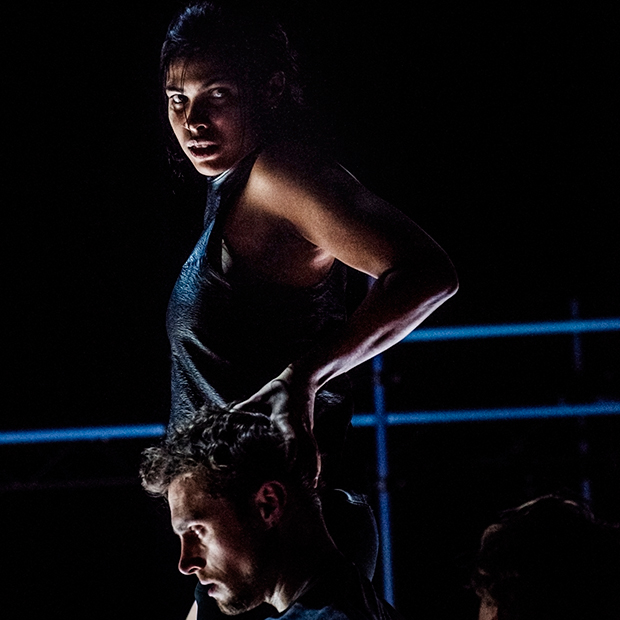
    The meeting between dance and music, voice and rhythm, is central in Alma Söderberg’s new work Noche, in which exploration takes a new form. At the same time slow and sudden, constantly recurring but nevertheless unpredictable, the night is a soft break with its own rhythm. The moonlight is at once sharp and confusing, the ground under one’s feet different. Nothing can be taken for granted, attention is increased.

    The night is the starting point for a different kind of music and dance, more uneven in its rhythm, more risky, at the same time soft, warm and dark. With its pastel colored and blurred edges, The Listeners is an evening work. Where it ends, Noche starts. From a soft web of several voices and movements, towards the cut, the interruption, the syncope.

    ”The world in which I have lived until now idolizes power and force, muscle and health, vigor and lucidity. Syncope opens onto a universe of weakness and tricks; it leads to new rebellions”.
    Catherine Clément

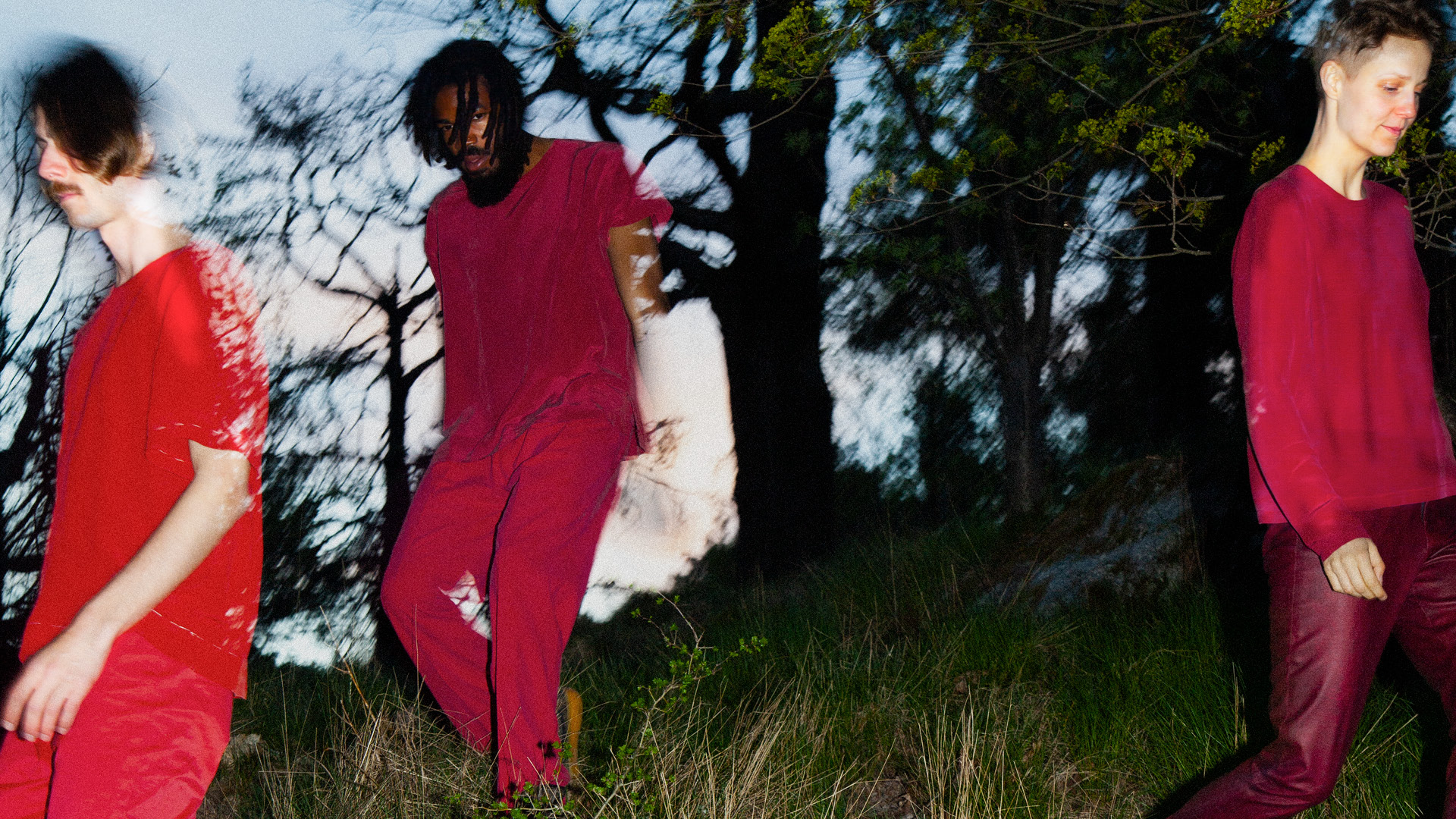
    Photographer: Nina Andersson

    Read more: “A good piece of music” – a conversation between choreographer Alma Söderberg, composer Hendrik Lechant Willekens and Gabriel Smeets, former artistic director Cullberg

    Noche was selected for The Swedish Biennial for Performing Arts 2023

  • Pop Up with Cullberg by Hooman Sharifi

    Pop Up with Cullberg by Hooman Sharifi

    Since 2019 Cullberg has entered the streets and appeared on open spaces with different pop up performances.

    This year’s pop up puts the lens on the collective and is created by Hooman Sharifi, who also choreographed While in Battle I’m Free, Never Free to Rest for Cullberg.

    Duration: approx. 20 minutes
    Price: No fee
    .

    Former pop up performances

    • 2019: Version of ON THE CUSP choreographed by Ian Kaler, accompanied by electronic brass music from Planingtorock.
    • 2022: Excerpts from Noche choreographed by Alma Söderberg: rhythm and voice in close collaboration.
  • ON THE CUSP

    ON THE CUSP

    “In the end, as a spectator you think you know the dancers personally. It is this closeness, the freshness, the energy that characterizes the piece.” Die Presse (AT)

    “It feels young, fresh and relevant, about the basic human drives that have been with us since the beginning. And that hung around and stuck in our bodies”
    “with an ear close to the music”
    “truly unique ”
    Cecilia Blomberg, Kulturnytt P1, Sveriges Radio.

    “direct, captivating and accessible” Västerbottens Folkblad
    “playfulness and humor”  Västerbottens-Kuriren
    “thought provoking and beautiful” Norrbottens-Kuriren

    Choreographer Ian Kaler creates for the first time a big stage production for Cullberg. ON THE CUSP will be a mix of live-practicing and synchronized movements, a spectrum of emotions and projections. It will be a combined live and video work, on a series of different topics. The work presents a collection of portraits, of the individuals, as well as of the group. Every dancer has their own story, and the company connects them. Who are the people in the group, and how do they construct this group? Are they characters or do they want to play a certain role? Shifting from different kind of characters, who are they in private and how does that shape the stage character? The music of electronically synthesized brass sound composed by Planningtorock will create bold, dramatic, playful and deeply moving dance pieces.

    The new work is a collection of portraits, one of each dancer, and one of the group. What will you create with the company?
    “I want to play with a mix of live-practicing and synchronized movements. It will be a combined live and video work, a series of different topics, in different ways. I am very interested in narrative, how little stories can be told through the body. I want to create portraits, of the individuals, as well as a portrait of the group. Every dancer has their own story, and the company connects them. Who are the people in the group, and how do they construct this group? Are they characters or do they want to play a certain role? Shifting from different kind of characters, who are they in private and how does that shape the stage character? Almost like a fake documentary. I will work with screens, and the bodies as screens and stand-ins of representations and imagination. And I will work with creating intensities, let the dancers play inside the system that the group is and generates. Every dancer will have their own mark in terms of character, movement, presence, clothing.. It might turn out to be funny, sad, and a bit ambivalent – I wanna go through a spectrum of emotions and projections. Originally I come from the abstract, going towards how I can tell stories. I want to explore that further in this process.”

    What method do you use?
    “The way I work is really a–live. Every person has to make their own decision in each moment, that is the practice. In rehearsal, I will give a structure, guidelines and conditions that the dancers will follow on stage. I want to develop a presence and character for each and every one of them, and at the same time have something that connects them as a group. I want to work with each dancer’s personal movement background. What do they bring, and what do they want to use?”

    What is your view on the company?
    “I am fascinated by the group. How do you work together in a space, the same people, over the years? The idea of community is relevant for this piece. They are very specific presences – I want the audience to get to know them via the piece, them as Cullberg dancers and as the humans they are. I am really looking forward to it!”

    And the music?
    “Planningtorock’s initial compositional concept for the music is a score, a sound track, composed solely for electronic brass instrumentation. Planningtorock has composed music for orchestras and string quartets on previous pieces but has choose to focus on the electronically synthesized brass sound for this piece.”

    Ian Kaler
    Ian Kaler, originally from Austria, studied Transmedial Art at the University of Applied Arts in Vienna and graduated from the BA Pilot program Contemporary Dance, Context, Choreography at the Inter-University Center for Dance, the University of the Arts in Berlin. Since 2010 he has developed his physical and creative practice in choreographic series in exchange with different artists through different (visual) media, among others, dancer and fashion designer Stephane Peeps Moun, musician Jam Rostron/Planningtorock, lighting designer and video artist Imogen Heath, and drummer Joy Leah Joseph. A special format within the o.T. Series is RAW PRACTICE which was presented at LABO Festival in Stockholm in April 2018, curated by Cullberg. In a structured and improvised jam session Kaler and Planningtorock uncover their shared practice and further develop it in an intimate dialogue that communicates between different media and languages. Most recently Ian Kaler has premiered the piece LIVFE, the first of a new series of works that combine movement with (spoken) language, live music and live video at Akademietheater in the frame of ImPulsTanz Vienna International Dance Festival, in August 2017. Ian Kaler develops workshops as research formats analog to his choreographic series, until now for DOCH, School for Dance and Circus, Stockholm, ImPulsTanz Vienna International Dance Festival, Tanzquartier Vienna as well as for the Escuela Profesional de Danza in Mazatlán and the University of Sonora in Mexico. Besides giving workshops for professional dancers with mixed abilities he has also transmitted his practice in workshops for practitioners from backgrounds other than dance.

    World Premiere at Tanzquartier Wien 10 January 2019
    Sweden Premiere at Norrlandsoperan, Umeå 30 January 2019

    Produced by: Cullberg
    Co-produced by: Tanzquartier Wien, Norrlandsoperan Umeå, PACT Zollverein Essen

  • Walk in art, with nature – Explorations of Now

    Walk in art, with nature – Explorations of Now

    Explorations of Now – Walk in art, with nature
    Dance, choreography, art and music in the middle of nature
    12–15 and 19–22 August, 2021

    Balingsta Gård, Orlången nature reserve, Huddinge, Stockholm

    During two weekends in August, the project Explorations of Now – Walk in art, with nature, takes place in the Orlången nature reserve in Huddinge south of Stockholm. Cullberg’s dancers together with other artists present over 20 art installations, talks and workshops, and invites the audience to begin the journey towards a sustainable world.

    Explorations of Now – Walk in art, with nature starts from Balingsta Gård’s “Ridhuset” in Orlången’s nature reserve and then takes the visitor through a guided tour around the nature reserve where Cullberg’s dancers present new works, together with art installations and performance art, with rock walls, fields, moss, trees and water as co-creators.

    Picture: Cullberg dancers Eliott Marmouset and Víctor Pérez Armero in Homo Saltator.

    Podcast from Orlången – Cullberg dancer Benjamin Pohlig meets artist on and off stage in Explorations of Now – Walk in art, with nature. Listen here!

    Read more about the program and the project.

    SVT Kulturnyheterna, August 16, 2021

  • Horse, the solos

    Horse, the solos

    Strongly affected by climate change and the current world situation, especially in America, Deborah Hays work for Cullberg; Horse, the solos is a meditation on survival or even an exercise in survival, inspired by all that is unseen in a single blade of grass.

    ”Horse, the solos is choreographed in a manner that relies on an intuitive understanding of risk, efficiency, and survival. There is control in efficiency but not risk-taking. Combined they establish the conditions for Horse, the solos”, says Deborah Hay on her new work.

    “I am interested in choreography that does not look like anything and is performed by exceptionally astute and experienced performers. Movements are spare, disorienting, yet mysteriously human in their application within an inextricably bound space.” Deborah Hay

    After the successful collaboration with Laurie Anderson in Figure a Sea, Deborah restaged her 2004 piece The Match with Cullberg for her 2019 Tanz im August retrospective in Berlin.

    Picture: Eliott Marmouset, Freddy Houndekindo and Louise Dahl, photographed at Norra Djurgården, Stockholm, May 11, 2021.
    Photo: Nina Andersson
    Art director: Martin Falck
    Press photos: Shaon Chakraborty

    ”Although Hay has been exploring the antidance of dance since the 1960s, this one does not become a pastiche or genre in itself. Maybe because she draws the principles to such an extent that they become something more than just a negation. Towards the end, it is as if the individual and expressive movements of the various dancers in this messy formlessness begin to look like my imagination about nature in its smallest components. A kind of primordial dance of physics beyond dance.” Dagens Nyheter


  • On Earth I’m Done: Islands

    On Earth I’m Done: Islands

    After creating two large scale productions for Cullberg the past years, Jefta van Dinther returns as Associated Choreographer to create two new works for the company. In the archaic-futuristic diptych On Earth I’m Done, the audience is transported to a place torn out of the conventional space-time continuum. The first part of the diptych, the solo Mountains is alternately performed by Agnieszka Sjökvist Dlugoszewska, Freddy Houndekindo and Marco da Silva Ferreira. The second part Islands, a group piece for 13 dancers, premiered in May 2022.

    “In culture, mountains symbolize permanence and stability, and are seen as a gateway to transcendence. To the mountains, and from the mountains, we call out for guidance. Islands, on the other hand, are surrounded by water, isolated, and incorporate a double bind; they are safe havens as well as enclaves of upheaval at the same time. An insular place of both beauty and danger,” says Jefta van Dinther.

    Part 2: Islands
    In On Earth I’m Done: Islands, the audience is transported to a place torn out of the conventional space-time continuum. Orbiting the conflicts of beauty and danger, existence must be rebuilt from scratch and living learnt anew. Elementary logics and irregular intelligences are being reborn; life passes between mineral, vegetal, animal, human and machinic forms. Islands is a performance which imagines an alternate order of organization, a state of exception, quarantined from the natural world. Here, replication becomes a mode of survival and dancing a weapon.

    “With Islands we are heading into a place where humanity can no longer be taken for granted. The life existing here thinks and acts and speaks through the vector of human emotion, but their feelings are synthetic. Their social interaction is hacked, their sexual reproduction is an interface, the care for their planet is automated,“ says Jefta van Dinther.


  • On Earth I’m Done: Mountains

    On Earth I’m Done: Mountains

    After creating two large scale productions for Cullberg the past years, Jefta van Dinther returns as Associated Choreographer to create two new works for the company. In the archaic-futuristic diptych On Earth I’m Done, the audience is transported to a place torn out of the conventional space-time continuum. The first part of the diptych, the solo Mountains is alternately performed by Agnieszka Sjökvist Dlugoszewska/Freddy Houndekindo/Marco da Silva Ferreira. The second part Islands, a group piece for 13 dancers, premiered May 11, 2022 at Norrlandsoperan.

    “In culture, mountains symbolise permanence and stability, and are seen as a gateway to transcendence. To the mountains, and from the mountains, we call out for guidance. Islands, on the other hand, are surrounded by water, isolated, and incorporate a double bind; they are safe havens as well as enclaves of upheaval at the same time. An insular place of both beauty and danger, says Jefta van Dinther.”

    PART 1: MOUNTAINS

    As human beings, we are perpetually haunted by our own implication in the nature-culture bind. Our unease is addressed downwards and upwards at the same time: to the unearthing of the ground as well as to the shrinking of the limitless sky. In Mountains, Van Dinther tackles the question of how to be and stay in love with our ever-changing world. Through an expulsion of words, both familiar and foreign, the performer on stage acts as a conduit, lamenting on behalf of others. Their being unravels in the nexus between the physical, biological and anthropological – between gravitational forces, instinct and desire.

    “Mountains is a tale of creation. The performance raises questions about what it means to be a human being, what it is to exist on and care for this planet. The performance delves into the intelligence of nature and the formation of culture. And looks at nature-culture’s intricately interwoven existence, says Jefta van Dinther.”

    In March 2021, Swedish National Television/SVT premiered a short film version of the work.

    Art director: Martin Falck
    Press photos: Urban Jörén

  • The Listeners

    The Listeners

    The collaboration between Cullberg and Swedish choreographer Alma Söderberg became a new adventure as Söderberg, after gathering experience in creating solos for herself and for a small number of dancers, made her first big scale creation with her first work for Cullberg, The Listeners.

    In the piece, Alma Söderberg continued her research on the relationship between dance and music. At the base of every creation are three building principles: rhythm, voice and movement, all simultaneously at work and a continuous repetition of the practice. Rhythm is not only the motor of her work but also the subject of her artistic research. Sound and movement are woven together in a composition that is rich in layers of perception.

    Using voice, rhythm and movement the dancers explore the relation between listening and moving. In a performance that could be a concert in the sense that it invokes listening, the space and the bodies are played as instruments. The dance becomes a tool to describe the sound, and the sound becomes a tool to describe the dance. Sounds and movements create knots and entanglements that feedback off each other and that produces a situation where the skill of paying attention is practiced on all sides, on that of the performer-listener and on that of the audience-listener. In that sense the title does not only refer to the performers but also to the audience. The role of the performer is to notice and let notice, the skill is to listen and describe.

    “The fourteen-year-old in me cannot believe that I will create for Cullberg. I have not had the ambition to create for a world-famous company, but when I got the invitation, I felt it was time for me to open up and share what I developed over the past ten years. Together with the dancers, I will work with the body as an instrument in the room. My works are rarely representative or narrative, what happens on stage is more like a concert, a musical exploration. The dancers will participate in creating the music they dance to live on stage. Listening is central, both to the silent movement and to the sounding, says Alma Söderberg about her work with Cullberg.

    Alma Söderberg was associated artist with Cullberg 2019-2022.

    Swedish choreographer Alma Söderberg was born and raised in Malmö. She studied at The Royal Swedish Ballet School before leaving for Sevilla and Escuela de Danza de Matilde Coral to study flamenco. She has since then, studied in Stockholm, Paris, Madrid, Amsterdam and Brussels. Alma Söderberg studied choreography at SNDO in Amsterdam, and graduated in 2011. During the past years, she has been based in Brussels and toured her creations to relevant venues and important festivals all over Europe. Her work is characterized by connecting dance, music and voice. Sound and movement are always intertwined, and a research of these expressions is constantly an ongoing part of Alma Söderberg’s artistry.

    In 2016 she was awarded the Swedish Theatre Critics award the Thalia Prize with the motivation:

    ”she presents a unique kind of performing arts, joining together dance, music and voice performance in an unceasingly fascinating and rhythmic performing language.”

    In 2016, Alma Söderberg was awarded The Birgit Cullberg Grant by The Swedish Arts Grants Committee with the following motivation:

    ”Alma Söderberg stands out among Swedish choreographers. She follows her own path – genre does not determine her performing arts. It is concert, performance and dance. Alma has been called the human sound and dance machine and her solos have been described as ‘sound and movement in a rhythmic symbiosis with roots in flamenco and tentacles towards Swedish folk music’. Alma Söderberg does not follow the stream, she works beyond ideological and aesthetic signs. Communication between the audience and her own body is the foundation. With movement, rhythm, music, sound and language, she breaks new ground and opens the borders of what a dance performance can and may be. She puts herself in the middle of time and beyond the conventions. With a number of solos behind her, as well as an international career, with the Birgit Cullberg Grant, we want to acknowledge a unique movement and sound artist.”

    Photo by Urban Jörén

  • The Match

    The Match

    In 2019, Deborah Hay restaged her iconic masterpiece The Match for Cullberg, her first as an associated choreographer. The work is a quartet of many layers with four solos within it, solos that are spontaneously cast each night by who from the quartet steps up to perform. Each time a different solo is highlighted. Funny and odd, The Match has been described as “a fascinating, vibrant battle of wits”. The restaged version of The Match premiered at Tanz im August in Berlin in August 2019, as part of the festival’s Deborah Hay Retrospective.

    November 2021, The Match will be performed at Mercat de les Flors in Barcelona with dancers Adam Schütt, Anand Bolder, Louise Dahl and Vincent Van der Plas.

    “My ongoing interest and excitement in working with Cullberg is its’ collective energy and openness to dancing together. Working within the company are an extraordinary number of individual dancers who exceed the threshold of bodily intelligence and movement virtuosity”, says Deborah Hay about her continuing work with the company. Taking a socio-political position in her work, Hay says: “Dance is my form of political activism”.

    Deborah Hay choreographed The Match in 2004 and premiered the work at Danspace, at 51. Mark’s Church in New York City in February 2004. lt was made for a selected group of highly experienced dancer and performers: Ros Warby from Melbourne, Australia, Chrysa Parkinson and Wally Cardona, New York City, and Mark Lorimer, London.

    The Match contains meditation like exercises that invisibly bind the dancers to the material by establishing a mental, emotional, and bodily rigor that is visible in the performance. The work is built on the nature of experience, attention and perception.

    As one major New York critic wrote: “There is no musical accompaniment, so the focus is on the dancers: their mystifying travels and relationships, both spatial and personal, and the satisfying way Ms. Hay distributes them about the space … in the strange and surprisingly handsome world of The Match.”
    The New York Times, Jennifer Dunning

    Deborah Hay herself summed up The Match in a question:
    “What if the potential to perceive time and space as unique and original, is not a theme, or movement style, or goal, but a frame for the performers to engage their bodily intelligence through a choreography of material that challenges definition?”

    The jury report from the BESSIE, aka the New York Dance and Performance Award, that was given to Deborah Hay in 2004 for The Match describes the piece as “a wondrously strange and impermanent meditation on disintegration, exploring realms from the ordinary to the preposterous by an interchanging cast of four characters.”

    Deborah Hay
    Deborah Hay, born 1941 in Brooklyn, has achieved icon status among choreographers. Her work was formulated in 1960s experimental Judson Dance Theatre in New York, one of the most radical and influential post-modern art movements. Hay’s dances center on undoing the body’s reliance on learned behavior by enlarging the field from which a dancer can resource movement. She spent many years choreographing solo works for notable artists including Mikhail Baryshnikov. The choreographer William Forsythe helped influence her international career after seeing the premiere of her quartet The Match in 2005 at the Montpellier Danse. She has been awarded many grants and awards including the inaugural and groundbreaking Doris Duke Artist Award in 2012. On May 5, 2015 France’s Minister of Culture and Communication awarded Hay the title of Chevallier de L’Ordre Des Arts et Des Lettres. In 2015, Deborah Hay created the work Figure a Sea directly for Cullbergbaletten with music by Laurie Anderson. The work has been highly acclaimed by audience and critics all over the world, toured in the US and all over Europe and been presented at prestigious festivals such as Montpellier Danse and the International Festival of Contemporary Dance of the Biennale di Venezia. Deborah Hay is associated artist with Cullberg 2019-2021.

    Year of origin: February 2004, Danspace, New York
    Cullberg premiere: Tanz im August, Berlin 23 August 2019

    Voices in media:
    The BESSIES, 2004
    “… a wondrously strange and impermanent meditation on disintegration, exploring realms from the ordinary to the preposterous by an interchanging cast of four characters in The Match at Dancespace Project.”

    Lisa Kraus, 2004, Dance Insider
    “Seeing Deborah Hay’s The Match at Danspace Project at St. Mark’s Church this past weekend makes it clear that Hay is a National Living Treasure, having forged a unique mode of performance that lives vividly, unfolding before our eyes… it is the body/mind of the performer that is visible above all else. Not only has that, continually dancing on a razor’s edge of newness brought exhilaration to dancer and audience alike.”

    Gia Kourlas, TimeOut New York, issue #435, 2004
    “The Match is a fascinating, vibrant battle of wits that unfold through a silent score of movement.”

    Robert Faires, Austin Chronicle 1/21/2005
    “Pulling this off, all four dancers exhibited extraordinary physical control, matched only by their exceptional willingness to explore this fascinating choreographic territory. Strange, funny, obvious, and obscure, this evening… gave me, in more ways than one, the time of my life.”

    The original creation of The Match was made possible, in part, with funds from the Danspace Project’s 2003-2004 Commissioning Initiative with support from The Andrew W. Mellon Foundation. The Match was further developed through a residency provided by The Joyce Theater Foundation, New York City, with major support from The Andrew W. Mellon Foundation. The restaged version of The Match, in 2019 is produced by Cullberg

  • HYPER

    HYPER

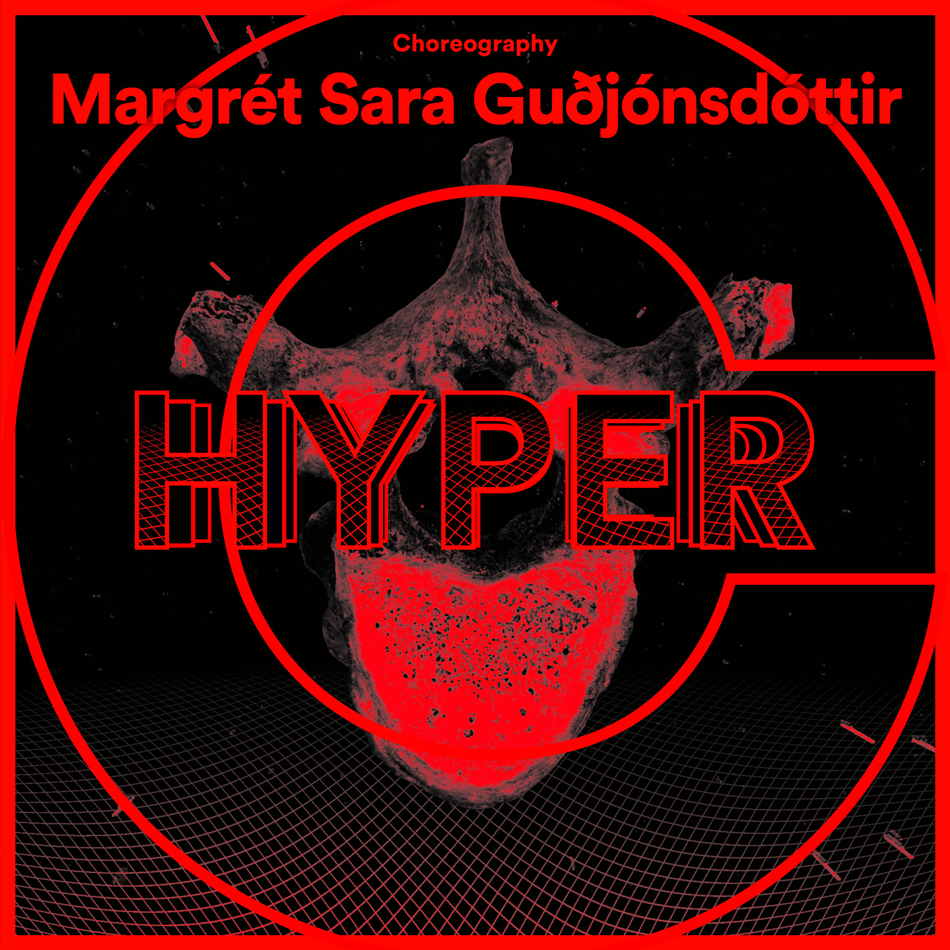
    HYPER dwells in the inner states of the corporeal reality of our times.
    In her commissioned work HYPER Margrét Sara Guðjónsdóttir considers the embodied effects of the social political landscape we live in. The work dwells on and inside the deep tissues both of this reality and of the bodies trying to cope with it. HYPER conveys the essences of this grand human drama as a cry from the body to a viewer who is offered to experience extreme internal and sensorial states through the bodies of four dancers. As a performance, it silently creeps under the skin and slides around in spaces within, confronting the bodily surface as a gateway to what lies beneath and beyond our superficial facade. HYPER disarms with its crisp stillness, and gives access to the healing aspects of confronting the inner reality of the de-bordered body, providing an alternate reality of pleasure and pain that comes with diving into the HYPER-states.

    World Premiere: 8 February 2017 at Inkonst, Malmö
    Duration: 40 minutes

  • The Return of The Modern dance

    The Return of The Modern dance

    One of the most interesting contemporary choreographers working today, the American choreographer Trajal Harell created a new piece for Cullberg, featuring six male dancers.

    Trajal Harrell works at the intersection between contemporary dance and the foundations of voguing. His work tours around the world and several of his productions have been selected as among the best dance works by Time Out New York. Harrell’s works have been invited to international festivals and presented extensively in the United States. Harrell is perhaps best known for a series of work titled Twenty Looks or Paris is Burning at the Judson Church which re-imagines a meeting between early postmodern dance and the voguing dance tradition, and was conceived as a series of seven pieces.

    All seven works in the series continue to tour internationally. Antigone Sr., the largest in the series, won the 2012 Bessie Award for Best Production. Most recently, he has begun a new research examining butoh dance from the theoretical praxis of voguing. His work, Used Abused and Hung Out to Dry, premiered at The Museum of Modern Art-MoMA in February 2013, where he has begun a two-year residency further developing this new body of work.

    World Premiere at Dansstationen, Malmö 19 March 2015.
    Length 30 minutes
    With six dancers

  • Against the Current, Glow

    Against the Current, Glow

    Against the Current, Glow (2015) was Brazilian choreographer Cristian Duarte’s first work for Cullberg. Set to new music created on theremin and synthesizers by Brazilian composer and musician Tom Monteiro, the piece comprised four unique solos for Cullberg’s Anna Pehrsson, Samuel Draper,
    Agnieszka Dlugoszewska and Daniel Sjökvist. Against the Current, Glow was to be combined with another repertory production to create a full evening.

    The starting point for the solo was the idea of an expedition into the depths of a dancer’s sensory archives. In his work, Cristian Duarte has previously focused on the dancers’ training history and on movements they have created in previous dances. He has worked specifically with the idea of a mashup between these former and current works, between what is passed and what is to come, and how this coexistence affects the movement choices of the dancers and the subsequent choreography.

    “For this solo creation, I will be attempting to activate the dancer’s memory by blending his/her past and present movement patterns to flow into new sensation and perceptual currents. I wish to unlock those “archives” through an embodied mashup of chemical and electrical synapses, where gaps turn into a concrete place to inhabit. An ocean of minimal details, to be grasped and forgotten. When mind is muscle, there arises an opportunity to make thinking processes more elastic, to defy linearity, like an organism that could suddenly swim against the current to set aglow other life forms in the surroundings.”

    – Cristian Duarte

  • Protagonist

    Protagonist

    Protagonist is choreographer Jefta van Dinther’s second big stage production for Cullbergbaletten. Elias, 2015’s major breakthrough artist in Swedish music, whose debut single ‘Revolution’ was a big hit, provides recorded singing and voice-over, accompanied by sound design and music from David Kiers, set design by artist duo SIMKA and lighting design by Minna Tiikkainen.

    Protagonist is a contemplation on mankind. Songs of revolution and dances of evolution tell a tale of how people congregate, take on and are given roles. All the while instinct, resistance and compulsion become evidence of the battle each and every individual is fighting. Struggling to belong, in search for a common meaning or belief, a community takes shape. Protagonist is a parable about care, kinship and alliance as well as isolation, control and estrangement.’Protagonist’ is Jefta van Dinther’s second creation for Cullbergbaletten. His first, the successful production ‘Plateau Effect’, premiered in 2013 and went on to tour throughout Europe. Van Dinther received the Swedish Theatre Critics’ dance award in 2013 for the production, also chosen to be performed at the Swedish Biennial for Performing Arts in 2015. Jefta van Dinther’s work is characterised by a vigorous physical approach and nearly always implies a staged research of movement itself. The moving body is centrefold in his work, interacting with light, sound and different materials to come together as a whole. His works deal with notions of the visible and the invisible, light and darkness, illusion, affect voice and image.

    ”Such intense scenes with such a big group of dancers would hardly be possible with any other dance company than Cullbergbaletten, an ensemble of artists-personalities that is able to psychologically embody, to dramatically be present, that is dance and bodily technical versed and is both cognitively and contemplatively trained.” Tageszeitung

    Duration approximately 60 minutes.
    World premiere 7 July 2016 at Julidans, at Stadsschouwburg, Amsterdam.
    Sweden premiere 23 November at Dansens Hus, Stockholm.

  • Plateau Effect

    Plateau Effect

    Following the successful staging of The Way Things Go (2009) for Cullberg in 2011, choreographer Jefta van Dinther was commissioned to create a new work, to premiere in Amsterdam in the summer of 2013.

    In the large scale work Plateau Effect (2013) van Dinther seeks to disorient and challenge the viewer with a layering of choreography, light, sound and scenography. See-sawing between the dancers and their activities on the one hand, and the materials they interact with on the other, a ‘choreography of matter’ emerges. Rudimentary elements merge and unravel to reveal a startling grandeur, where the raw reality of materiality flips into a psychedelic space of exception. At the intersection between matter-of-fact and make-believe Plateau Effect puts to the tests our ability to transgress the here and
    now.

    In Plateau Effect, the dancers resemble a community that is constantly on the move in an unsettled progression through various terrains. Communicating, transporting, constructing and inhabiting morphs into choreography as they unite in a joint effort to create that which only a collective can. Through body and voice, through sound, light and material, this force of alliances directs and redirects towards and away from the audience. Immersed in the sonic landscape of David Kiers, with lighting design of Minna Tiikkainen and scenography by SIMKA, the performance races through a sequence of laborious productions, vibrating and unstoppable.

    “With Plateau Effect, I want to continue my research in the areas of perception”, says van Dinther. “I want the body, light and sound to quite literally extend and reach out to the spectators, with directness and without a need for interpretation. I want to cultivate and promote a space where an
    audience can spend time with the things they do not recognize. The title Plateau Effect refers to a temporary state of stable productivity, in which a leveling out occurs.” – Jefta van Dinther


    In the press

    “Brutal, brilliant and thrilling by Cullberg Ballet.”
    “…a puzzling and intelligent ballet with a brilliant final.”
    “The long beginning is purely fabulous. Vertiginous, mysteriously beautiful, providing examples of Jefta van Dinther’s choreographic trademark: the ability to, from a nearly simple concreteness, create an as intelligent as sensual associatively flow of movement.”
    “Cullberg Ballet makes Plateau Effect a flowing and genuine ensemble work.””When one dancer finally manages to break out from the collective and release herself from the thing’s metamorphosis, you know that the end is near. Still, the final is as surprising as adorably brilliant.”

    “…a beautiful and intelligent stage experience.”
    – Dagens Nyheter

    “…visual and beautiful.”
    – Sveriges Radio P1, Kulturnytt

    “During the world premiere of Van Dinther’s newest creation, nine dancers construct three wondrous worlds.”
    “Hallucinatory, never shown before, it seems to be a film that we are looking at.”
    “… it is a soft, smooth, seductive world. When the dancers finally walk upright again, they are totally transformed, creatures from another planet. Infinite energy vibrates through their undulating bodies, the generated heat streaming towards the audience. An audience that now, alas, has to leave Van Dinther’s universe.”
    “…delightfully beautiful.”
    – Theaterkrant

    “Jefta van Dinther (SE/NL) creates an overwhelming world for the international Cullberg Ballet (Stockholm) where dance, materials, sound and light each play an equal role. The force and the effort of the dancers, in interplay with the materials, generates beautiful images on the stage. The plateau effect is felt, and certainly not uninteresting.”
    “Van Dinther and Cullberg Ballet show that both the “experiment” as well as the installation go well together on the big stage.”
    – Dans Magazine

  • Figure a Sea

    Figure a Sea

    Expressen: “Impressive is an understatement.”
    SF Gate: ” …an extraordinary new work.” “The dancers add up to a diverse, wonderfully sleek and resilient crew; anywhere you look, there’s something appealing and it is always beautifully articulated.”

    Bachtrack: “existentially tender and, finally, terribly poignant, terribly human.”

    Seen and Heard International: “The evening was unusual and rare – modest, contemplative, and intelligent, it satisfied the soul in these noisy, troubled times.”

    Tanz: “Figure a sea is a subtile and tender piece, ingenius too and extremely exhilarating.”

    Berliner Zeitung: “So young, so fresh, so awake. Contemporary dance like Figure a Sea is seldom seen”. “This piece should have opened the festival because it is representative and at the same time important art and a shock.”

    Dagens Nyheter: “Magnificent, skillful and peaceful”
    “Cullbergbaletten’s collaboration with Deborah Hay is a success. Figure a Sea is a thoughtful, flowing and very beautiful performance.”
    “The performance is a remarkable and sublime meditative experience.”
    “Cullbergbaletten with guests impresses.”

    SR Kulturnytt: “60 minutes of purity, beauty and body.”
    “A wonderful meeting between Laurie Anderson and Cullbergbaletten”

    Cullbergbaletten continues to challenge the audience’s experience of dance. Through their curious and international collaborations the company helps change how the world sees dance. Figure a Sea brings together Cullbergbaletten’s dancers with two of the performing arts very greatest: the choreographer Deborah Hay and composer Laurie Anderson.

    Figure a Sea is a meditation on seeing. Seeing music, fleeting incidences and synchronicities, unbelievable unexpectedness and, most surprising seeing the unnamable. It is a space for seeing oneself seeing”, says Deborah Hay on Figure a Sea for Cullbergbaletten.

    American Deborah Hay (born 1941 in Brooklyn) has achieved icon status among choreographers. Her work was formulated in 1960s experimental Judson Dance Theatre in New York, one of the most radical and influential post-modern art movements. Hay’s dances center on undoing the body’s reliance on learned behavior by enlarging the field from which a dancer can resource movement. She spent many years choreographing solo works for notable artists including Mikhail Baryshnikov. The choreographer William Forsythe helped influence her international career after seeing the premiere of her quartet The Match in 2005 at the Montpellier Dance Festival. She has been awarded many grants and awards including the inaugural and groundbreaking Doris Duke Artist Award in 2012. On May 5, 2015 France’s Minister of Culture and Communication awarded Hay the title of Chevallier de L’Ordre Des Arts et Des Lettres.

    Laurie Anderson (born in 1947 in Glen Ellyn) began her career as a sculptor and performance artist in the late 1960s. Early in her career she worked as an illustrator and art critic. She is a pioneer in electronic music and has written both popular and art music and collaborated with, among others, William Burroughs, Peter Gabriel and Lou Reed. Since 1975, she has recorded seven albums. Anderson plays several instruments, variations of the violin being her main one. O Superman, from 1981 is one of her most famous songs which also reached as high as second place in the British charts. Her film Heart of a Dog was screened at the Venice Film festival in 2015.

    In Figure a Sea the dancer and the stage become a sea of endless possibilities. The choreography moves between being technically proficient and minimalist in its expression. It is intimately choreographed yet never the same. Hay challenges, without diminishing, the dancer’s intelligence, beauty, humor, and alacrity. Ease, accuracy, visibility, ambiguity and uniformity are the work’s key ingredients.

    Deborah Hay proposes the same set of “what if?” questions for the company dancers, as if stacking multiple meditations at once. They do not look at the world when they are dancing. They participate in it.

    Approximately 60 minutes, no intermission.
    World premiere at Dansens Hus, Stockholm, Sweden 24 September 2015.

    Co-commissioners
    Zodiak, Center for New Dance, Helsinki, Finland.
    Peak Performances @ Montclair State University, New Jersey, USA.
    Balletto di Roma, Rome, Italy.
    Centro per la Scena Contemporanea – Comune di Bassano del Grappa, Bassano del Grappa, Italy
    CCAP, Stockholm, Sweden
    Supported by the Italian Cultural Institute, Stockholm

  • The Mental States of Sweden in Dance

    The Mental States of Sweden in Dance

    One of foremost Swedish playwrights and directors Mattias Andersson’s The Mental States of Sweden in Dance is the first work he created for Cullberg. The piece is a continuation of Andersson’s acclaimed documentary theater research project The Mental States of Gothenburg and The Mental States of Sweden.

    As in these previous works, the starting point is a comprehensive documentary interview project in collaboration with sociologists and researchers. People from different social backgrounds, from the north to the south of Sweden, are asked “Is there a special event in your life that you would like to see danced by Sweden’s leading dance company?” The show is developed and structured around the answers that were received, making The Mental States of Sweden in Dance a sociological and aesthetic snapshot of Swedish society as it is currently constituted.

    “It is very inspiring to work with dancers in this context. Many of my most important performing arts experiences have been dance performances. I also hope to further develop my thoughts on the body, space, reality, fiction and how a person’s life story can be transformed into dramatic performance”
    – Mattias Andersson.

    Mattias Andersson

    Mattias Andersson started his theatrical documentary investigation with the show The Mental States of Gothenburg at Angered Theatre in 2006. In 2013, The Royal Dramatic Theatre followed up with The Mental States of Sweden.

    Mattias Andersson works as a playwright and director, and in 2006 was named the artistic director of Backa Theatre, part of Gothenburg City Theatre. Mattias Andersson’s plays have been represented at the Royal Dramatic Theatre, Stockholm City Theater, Gothenburg City Theatre, Malmö City Theatre and internationally in Denmark, Norway, Finland, Germany, Russia, Romania, Italy and Serbia.

    In 2006 Mattias Andersson was nominated for the Nordic Playwrights’ Prize. He was awarded the Swedish Ibsen Prize in 2007 for his work of Crime and Punishment performed at the Backa Theatre. It also earned him the Expressen Theatre Award 2007, the Swedish Theatre Critics Award 2007 and was nominated for Dagens Nyheter Cultural Prize. Lille Kung Mattias performed at Backa Theatre was awarded the Swedish Theatre Critics prize in 2009. The radio-drama version of Crime and Punishment earned him the international Prix Marulic in 2010. Andersson was awarded the Svenska Dagbladet’s Thalia Prize in 2013. Many of Mattias Andersson’s plays have also been invited to international festivals in Belgrade, Washington, Cologne and Helsinki. Between 2015/2016 his version of Dostoyevsky’s The Idiot was played at the Royal Dramatic Theatre. In the spring of 2016, he created The Misfits, an international co-production with the European theater network Prospero. In autumn 2016 Andersson directed Deformed Persona at the Royal Dramatic Theatre, and in autumn 2017 Uppenbarelsen.

    World premiere September 8, 2017 at Elverket, Stockholm. The Mental States of Sweden in Dance is a co-production with The Royal Dramatic Theatre/Dramaten.

  • NEAR

    NEAR

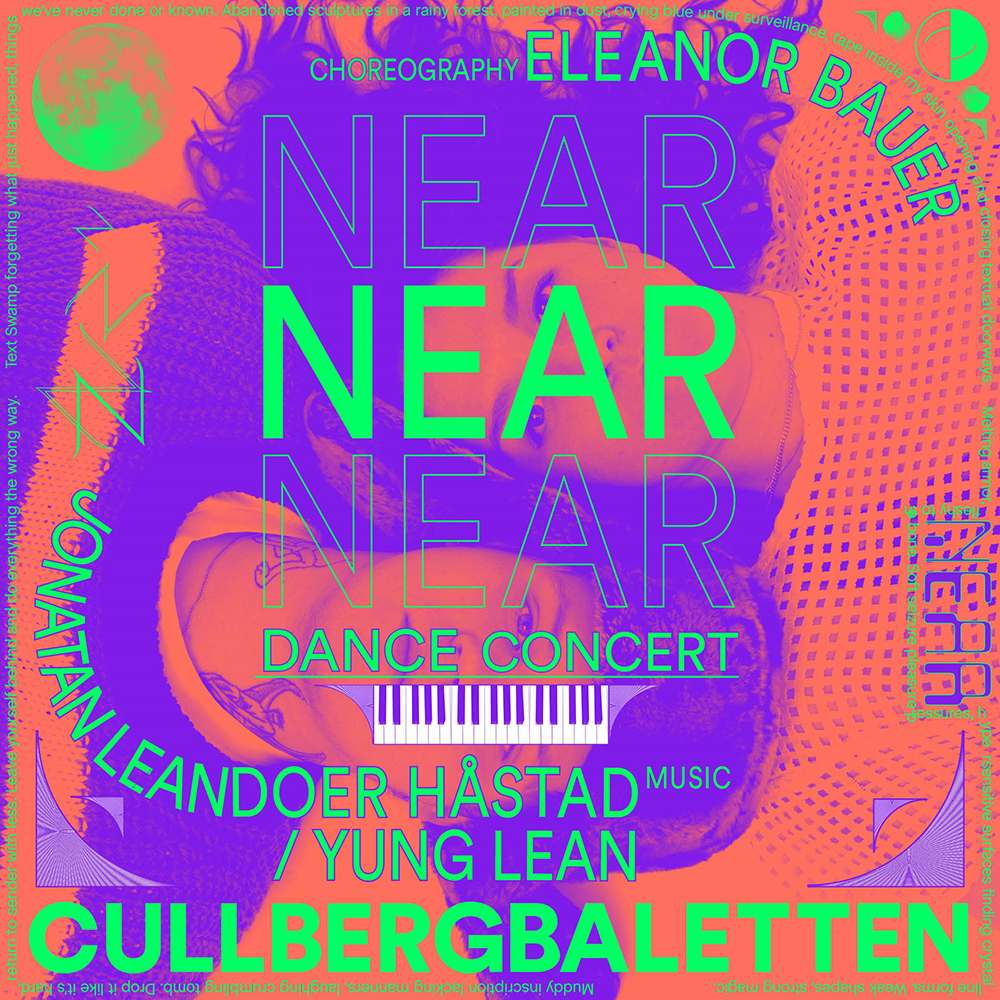
    In NEAR, twelve dancers meet in a cabin, by a swamp, in a no-man’s land between nature and civilization. Together, they bring a bold dream to life, blending the genres of musical concert and surreal narrative ballet in a cinematic theater setting. NEAR is complete enlightenment and 100% honest, but never familiar, intimate but never comfortable.

    For the first time, choreographer Eleanor Bauer is working with Jonatan Leandoer/Yung Lean and Cullberg. Together they create a dance concert, a shared fantasy world. For both artists, a strong relationship with writing is at the center of their respective artistic activities, and poetry has become the common starting point for their collaboration.

    Bauer is originally from the USA, and is a doctoral student in choreography at Stockholm’s School of the Arts. Jonatan Leandoer Håstad/Yung Lean has created the music in collaboration with ambient multi-instrumentalist and video artist Frederik Valentin. Together, Cullberg’s dancers create a temporary autonomous zone where they navigate through improvisation and choreography in a musically and poetically structured universe. Driven by fragile forms and strong magic, the collaboration becomes a poignant and sincere exploration of what it takes to be awake in the world, in a body, with others.

    NEAR – a dance concert by Eleanor Bauer and Jonatan Leandoer Håstad/Yung Lean
    Concept: Eleanor Bauer and Jonatan Leandoer Håstad/Yung Lean
    Director: Eleanor Bauer
    Choreography: Eleanor Bauer together with the Cullberg dancers
    Music: Jonatan Leandoer Håstad/Yung Lean in collaboration with Frederik Valentin
    Scenography: Josefin Hinders
    Lighting design: Jonatan Winbo
    Costume design: Pontus Pettersson
    Rehearsal director: Lisa Drake
    Assistant to the scenographer: Linnea Birkelund
    Graffiti sandbox: Jenny Palén and David Danell
    Photo: Urban Jörén
    Art direction, design: Martin Falck
    The scenography is made by Riksteaterns Teknik och Ateljéer.
    World premiere: Way Out West, Gothenburg, 10 August 2018
    Co-production: Cullberg, Luger, Way Out West Festival Gothenburg and Southbank Centre, London

  • Antigone

    Antigone was created in 1979 by Mats Ek and was in the company’s repertoire for two years. Having previously danced each performance of Antigone himself, Ek finally saw the work as member of the audience and, in so doing, decided to rework the piece. Almost ten years later, in 1988, a renewed version of the original was premiered by Stuttgart Ballet under the title Som Antigone (Like Antigone). The piece featured new music, costumes and decor and was slightly shorter in duration at 35 minutes long.

    Music:

    Theodorakis
    From the Angel Quartet, 1.41 minutes
    Zorba the Greek, 7.5 minutes
    Publisher: EMI
    7C062-35287

    Hadjidakis
    Tziakonta’s Smile, 4.05 minutes
    Publisher: EMI
    7C-062-3528

    Street of Dreams, 2.43 minutes
    Publisher: Minerva
    22014

    Today’s Sorrow, 3.30 minutes
    Publisher: EMI
    14C062-70236

    Eyα Ματόκλαδά Σου Λάμπουν (English title: Your Eyelids Shine), 2.35 minutes
    Minos MSM 221
    Folk music

    Afino gia stis omorfes, 4.23 minutes
    Thrakikos mandilatos, 2.57 minutes
    Publisher: EMI
    14C054-70818
    Hassapico dance with Baglama, 2.35 minutes
    Publisher: Minerva
    22019

    Trad. arr Tsistoudis
    Zeimbekiko politiko, 3.30 minutes
    Publisher: Odeon
    É056-35191

  • Cullbergbaletten celebrates 50 years!

    Cullbergbaletten celebrates 50 years of extraordinary ground breaking contemporary dance in 2017. For the anniversary, the company presented a unique encounter between two monumental works that were created for and with the company: Eurydice is Dead (1968) by Birgit Cullberg and Protagonist (2016) by Jefta van Dinther. The celebration program was presented at Dansens Hus, Stockholm 27-29 April 2017.

    “We are delighted and excited to present Eurydice is Dead and to show it alongside our latest creation Protagonist by Jefta van Dinther. Both pieces explore the need for, and the aftermath of a revolution. To present these two art works on the same stage on one evening is more than just a way of connecting the past with the present. From this encounter of two monumental choreographies from Cullbergbaletten’s repertoire a new energy will emerge that allows us to see the intrinsic artistic quality of each work”, says Gabriel Smeets, artistic director.

    Eurydice is Dead premiered in January 1968. A political creation at the time, the piece focused on the individual’s fight against power and oppression, inspired by the movie Battle of Algiers (directed by Gillo Pontecorvo) and the Greek mythology. Protagonist by Jefta van Dinther was created with fourteen dancers from the company and premiered at Julidans in Amsterdam in the summer of 2016.


    Jubilee program, Dansens Hus, Stockholm 27-29 April 2017

    Eurydice is Dead and Protagonist, Dansens Hus, 27-29 April

    Eurydice is Dead
    Choreography Birgit Cullberg
    Restaging Mats Ek and Ana Laguna
    Original costume and set design Eva Ek-Schaeffer
    Costume Mylla Ek
    Lighting design Martin Säfström
    With 14 dancers.

    Protagonist
    Choreography and direction Jefta van Dinther
    Music and sound design David Kiers
    Lighting design Minna Tiikkainen
    Set design SIMKA
    Song and voice ELIAS
    With 14 dancers.

    Seminar 27 April, Dansens Hus, Lilla scen

    Where does the dance go when it is danced? – A seminar on dance, memories, legacy and archives.

    The ephemeral is one of the core characteristics of the art form called dance. Dance happens in space and time, in a limited encounter of dancers and audience.  Dance can hardly be caught in a material form to be preserved to survive. Yes, we have videos, films, notes, notation forms; they are an attempt to capture the movement. But the movement itself, in that space and that time, is gone forever. As Marina Abramovic recently said about restaging performances “It is a living art. If you don’t re-perform that, it becomes a photograph in a book or a bad video”.

    The ephemeral quality makes it impossible to put the dance in an archive box and bring it back in the moment someone wants to experience it again. The dance, after it is danced, is taken home by the audience. Becomes part of memories, mixed with imagination, projection, deformation. In the dancers body the dance lives on as a body memory. What is it that we need to do with a choreographers’ legacy? Restaging the choreographies? Cherishing the essence of the choreographers’ views on dance?  Researching and studying them and projecting a path into the future with new works, with new dance?

    This seminar will focus on these questions and try to find answers.

    Schedule

    9:00-9:45 Registration
    9:45-10:00 Introduction by Gabriel Smeets (Artistic Director, Cullbergbaletten).
    10:00-10:30 Keynote by Thomas Thorausch (Tanzarchiv Deutschland)

    10:30-12:00 Panel I.
    A personal conversation about the legacies of Birgit Cullberg and Pina Bausch visiting memories, family matters and responsibility, state affairs, organization of the future and more.

    Moderator: Anna Efraimsson (Senior Lecturer in Choreography DOCH, Producer/Curator). With: Salomon Bausch (Executive Director Pina Bausch Foundation), Mats Ek (Choreographer/Director)

    12:00-13:15 Lunch

    13:15-14:15 Panel II.
    We reflect on the dancer as a bearer of a personal movement archive, derived from work with one or many choreographers. This panel will offer reflections on how this view on the individual performer as an archive relates to legacy, both for the dancers and for the sector in large.

    Moderator: Magnus Nordberg (General Manager/Producer, Nordberg Movement). With: Susan Kozel (Professor of new media, Malmö University), Agnieszka Sjökvist Dlugoszewska (Dancer, Cullbergbaletten), Rani Nair (Dancer/Choreographer).

    14:15-14:30 Break

    14:30-16:00 Panel III.
    Piercing through and knitting together past, present and futures, archives are both: always already there, always yet to come. The panel will question how our archives are potential ways of world-making: how they normalize, legitimize and aesthetize gestures, movements and bodies; how they are giving visibility to some bodies while leaving others in absence. In dialogue, we will investigate the role of projection and speculation in archival practice: the queer potential of the past, immaterial histories and imaginary bodies.

    Moderator: Sandra Noeth (Dramaturge/Curator and senior lecturer at DOCH). With: Manuel Pelmus (Choreographer), Zoë Poluch (Choreographer), Eike Wittrock (Curator/Dance Historian, University of Hildesheim)

    16:00-16:30 Wrap Up by Gabriel Smeets + further Q&A

    3 x Birgit, Södra Teatern 20-21 May
    Cullbergbaletten’s dancers Adam Schütt, Eva Mohn and Daniel Sjökvist create choreographies inspired by or based on Birgit Cullberg’s works. These unique interpretations are Cullbergbaletten’s birthday gift to the audience and will be presented at Södra Teatern. FREE ADMISSION!

    Video competition
    Cullbergbaletten invites everybody between 13 and 18 years to create short films inspired by Birgit Cullberg’s life and work. The winners will be presented at Dansens Hus, in the intermission, 27 April.

  • Pite/Inger/Ekman

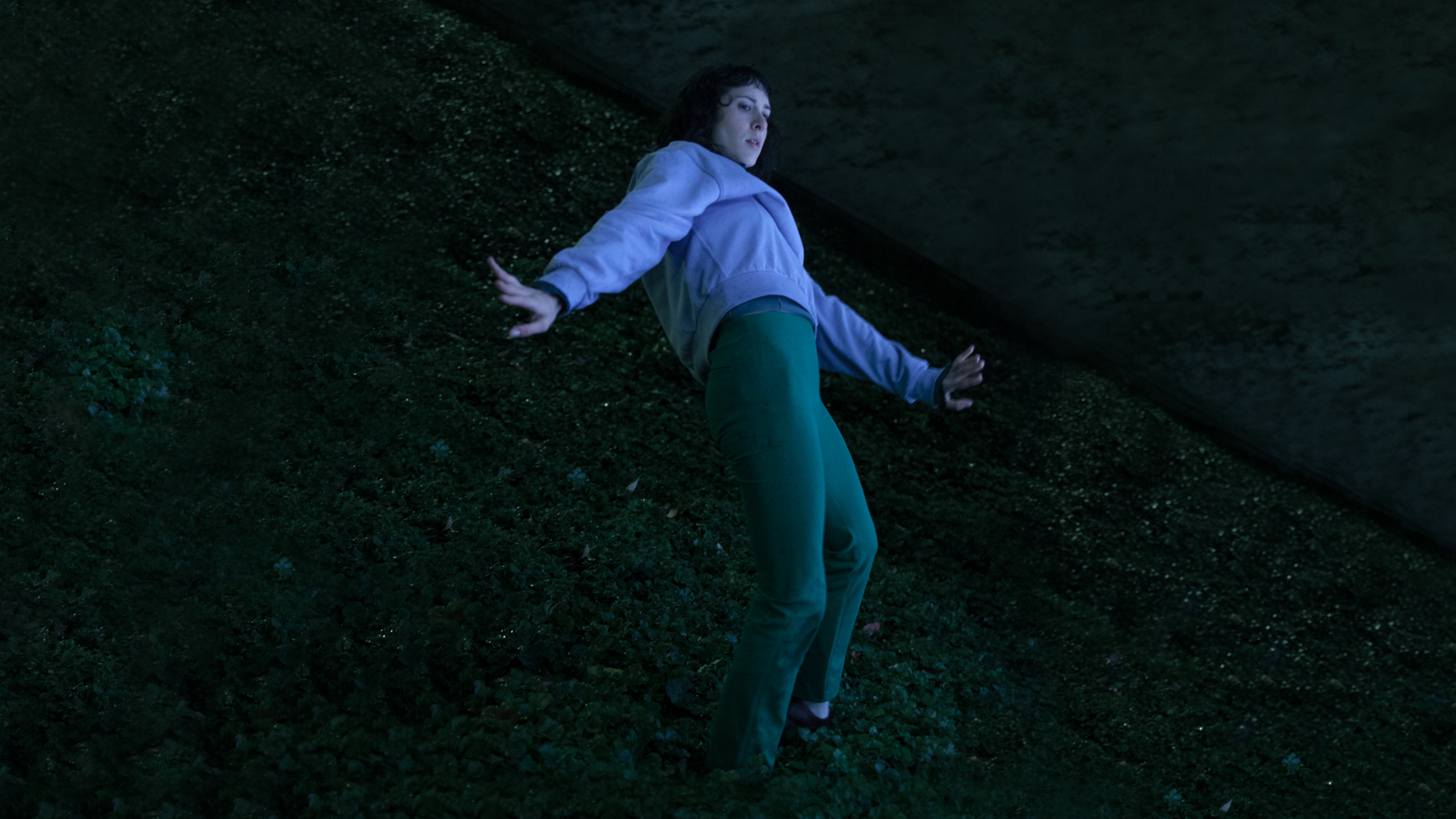
    Three works by three internationally renowned contemporary choreographers. In the autumn of 2012, the Cullberg Ballet toured Korea and Norway with: xspectacle by Crystal Pite, Negro con Flores by Johan INGER and the dance film 40 M UNDER by Alexander Ekman.

  • Urban connection: Improvisation with Soul Sweat and Swedish Radio’s Symphony Orchestra

    With the Swedish Radio Symphony Orchestra (dir Daniel Harding) and the dance company Soul Sweat Crew, the Cullberg Ballet concluded the festival Urban connection 2013. The Swedish Radio Symphony Orchestra performed Earth Dances by Harrison Birtwistle while dancers from the Cullberg Ballet and Soul Sweat Crew improvised to the music.

    Having listened to the music together, and danced various iterations and ideas prior to the event, the dancers from each company and musicians were able to meet under time sensitive circumstances and create a unique performance.

    Music: Earth Dances by Harrison Birtwistle

  • Eden

    Eden was the original title for Adam and Eve. The duet who last danced with the Cullberg Ballet in 1988.

  • Jag är inte du (I am not you)

    Jag är inte du (I am not you) was the first name given to the work based on the story of Fedra, originally made for Norwegian television in 1966. The music for the television production was specially commissioned by Norwegian composer Bjarne Brustad. When the work was moved to the stage the following year, organ music by Hilding Rosenberg was used instead and the work also received a new title: Fedra.

  • Facetter

    The Cullberg Ballet’s very first premiere took place at Stockholm City Theater on March 5, 1967. Five works were presented, all choreographed by Birgit Cullberg to contemporary Swedish music. The program included Dionysus, which was presented in an adapted form under the name Facetter after Karl-Birger Blomdahl’s symphony of the same name.


  • Dialog

    Like many of Birgit Cullberg’s works Dialog, set to Sven-Erik Bäcks String Quartet No. 3, revolves around communication between a man and a woman. The work, considered incomplete at the time it was premiered, depicted a marital crisis. With themes of illness running throughout, the work evoked a couple with extreme difficulties communicating. A woman, the sacrificial character, and a man who eventually succumbs to mania.

  • Narcissos och höstvinden (Narcissus and the Autumn Wind)

    In the work Narcissus and the Autumn Wind, Birgit Cullberg drew inspiration from Greek mythology, as in previous pieces.

    “… she sends an autumn breeze in the form of a woman to push Narcissus out of his self-reflection, tumble with him on the ground and give him a go before he sinks into his beauty dream again. Is it the choreographer’s own struggle with overly introverted and self-reflective dances that lies behind this choice? “

    The critic Anna Greta Ståhle in Dagens Nyheter Quoted in Erik Näslund’s book Birgit Cullberg.

  • Tidsfördriv

    Tidsfördriv was modernist dance of death. This dance macabre took place under the threat of ultimate destruction, in which a young girl acts as the organizer of various games.