Category: Projects

  • A celebration of dance

    A celebration of dance

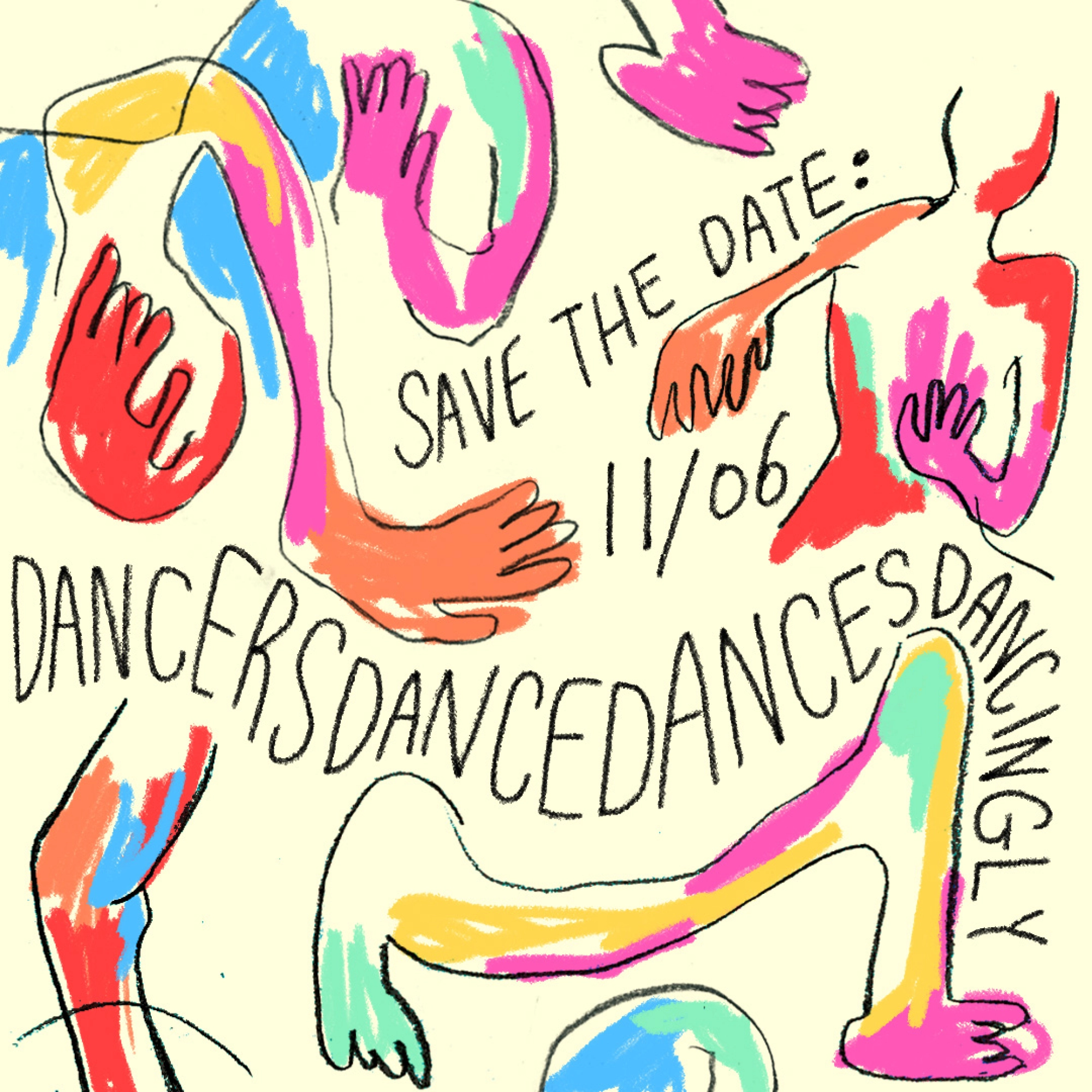
    The publication dancersdancedancesdancingly is something as unusual as a collection of texts about dance, by dancers, for dancers. It is a collective manifestation to create a platform for dialogue, reflection and knowledge of contemporary dance art in Sweden. The publication was released on June 11, 2024 and is available for digital download since June 12, 2024.

    In dancersdancedancesdancingly we meet active dance artists who individually and collectively – and in a highly personal way – invite the readers to their different dance worlds. The intention of the collection is not for them to be seen as individual voices but as a collective manifestation to create a platform for dialogue, reflection and knowledge of the art of contemporary dance.

    – dancersdancedancesdancingly is aimed at everything from dance artists to amateur dancers, from the dance floors in the countryside to the dance halls in the city. It is also a publication for politicians who need to dive into the art of contemporary dance as well as for the public to see the value of the art of contemporary dance as part of the democratic society, say editors Paloma Madrid and Nina Josef, both professional dancers and choreographers, and continues:

    – We want to show the spectrum of artistry that exists within the Swedish contemporary dance and choreography field today, to raise awareness and debate about both exclusion, slow change and institutional passivity.

    Riksteatern and Cullberg together with MDT (Moderna Dansteatern i Stockholm), Danscentrum Stockholm and Stockholms konstnärliga högskola (SKH) are publishers for the publication. The institutions have for some time had a dialogue about a publication about dance where different dance artists were given the opportunity to express themselves in writing about their dance.

    – You could say that it is a festival in a written form where we see the differences and similarities of the dancers and choreographers and give us an insight into these artistry. I hope that this publication creates curiosity both within and outside the dance field, says Riksteatern’s director of dance Mia Larsson.

    Contributing artists: Anna Vnuk, Bambam Frost and Lydia Diakité, Carina Reich and Bogdan Szyber, Cristina Caprioli, Daniel Staaf, Maria Naidu, Mohanned Hawaz, Nassim Meki, Niki Tsappos, Ola Stinnerbom, Rani Nair, Satoshi Kudo, Sofia Castro, Sebastian Lingserius and Nefeli Oikonomou and the collective New Movement.
    Editors: Ninos Josef and Paloma Madrid
    Coordination: Angelica Piñeros
    Graphic designer: Ebba Hägne
    Translator: Peter Mills and Angelica Piñeros
    Photographer: Carlos Zaya (unless otherwise noted)
    Publishers: Moderna Dansteatern (MDT Sthlm), Cullberg, Riksteatern, Danscentrum Stockholm, Stockholms konstärliga högskola/Dance (SKH)

    READ DANCERSDANCEDANCESDANCINGLY HERE

  • Release party for dancersdancedancesdancingly @ MDT Moderna Dansteatern

    Release party for dancersdancedancesdancingly @ MDT Moderna Dansteatern

    RELEASE PARTY FOR NEW PUBLICATION

    At MDT, Moderna Dansteatern, Slupskjulsvägen 30, Stockholm
    Tuesday 11th of June, 5pm-8pm
    RSVP here by June 7.

    About the publication

    dancersdancedancesdancingly is a publication, curated by Ninos Josef and Paloma Madrid, which aims to explore and celebrate artistry within the multifaceted landscape of Swedish dance art.

    dancersdancedancesdancingly is a collection of portraits forming a collective manifestation with the desire to create a platform for dialogue, reflection, and knowledge dissemination about dance as a universal artistic language and its significance.

    dancersdancedancesdancingly is an in-depth documentation of artistic perspectives and experiences of contemporary issues within our shared art form. An appreciation for the power of dance in our contemporary society.

    Participating artists: Anna Vnuk, Bambam Frost and Lydia Diakité, Carina Reich and Bogdan Szyber, Cristina Caprioli, Daniel Staaf, Maria Naidu, Mohanned Hawaz, Nassim Meki, Niki Tsappos, Ola Stinnerbom, Rani Nair, Satoshi Kudo, Sofia Castro, Sebastian Lingserius, and Nefeli Oikonomou, as well as the collective Nya Rörelsen.

    For more information and inquiries, please contact:
    Ninos Josef and Paloma Madrid, Editors in chief
    Email: dansantologi2024@gmail.com

    Editors in chief: Ninos Josef and Paloma Madrid
    Graphic design: Ebba Hägne
    Translator: Peter Mills and Angelica Piñeros
    Coordination: Angelica Piñeros
    Photographer: Carlos Zaya (unless otherwise stated)

    Publishers: MDT Moderna Dansteatern, Cullberg/Riksteatern, Danscentrum Stockholm, SKH Stockholm University of the Arts DANCE

  • Q&A Jefta van Dinther and Suelem de Oliveira da Silva, May 2021

    Q: What would you say is the core of this piece. What ”state is it in”?

    Suelem: Yes, the core of this piece is the relationship between us and nature.

    Jefta: Mountains deals with the intricately interwoven relationship between nature and culture. In it, a human being interacts with her environment, which is a 500 meter long piece of fabric that slowly climbs up and gradually empties out from the stage. Through this interaction, their distinctness and separateness is clarified, but also blurred and confused. Nature and culture appear not so much as a dichotomy but as a bind, or as a continuum. Another central theme is that of the formation of culture, or cultures, plural. Mountains stages cultural expressions and questions how they appear in bodies, and in a body’s relation to their surroundings. In the theatre, these become representations giving rise to a field of associations. I Mountains we are dealing with various cultural expressions, from archaic to futuristic, from archetypal to uniquely idiosyncratic. From classicism and chiaroscuro to pop-culture and sci-fi.


    Q: What do physical mountains mean to you, what do they represent? And what is the more abstract meaning?

    Suelem: For me it represents something bigger than us, something powerful that I do not think we are actually able to comprehend. It is also a symbol for lamentation.

    Jefta: Mountains symbolise permanence and stability and are seen as a gateway to transcendence. To the mountains, and from the mountains, we call out for guidance. They stand for something larger than human, beyond us. The mass of a mountain is, unlike anything else in my experience, experienced also immaterially – as a force, or as time, and thereby enters into a spiritual dimension of existence.


    Q: In what ways do your different backgrounds play a role?

    Suelem: Despite our different backgrounds we both grew up with close access to nature, but very different types of nature. But the experience of having nature in life I think made it possible to meet in that shared interest.

    Jefta: Suelem and I have vastly differing backgrounds, in many respects the opposite ones. But what connected us, in working and in developing the performance, was actually more those aspects that we shared. We both come from evangelical backgrounds, we both started dancing in the church, we both live or have lived in cultures very far away from our own, we both have experienced an outsidership in the societies we have been part of and we both share an affinity for rituals, for the subjective sensemaking of the body and for certain contemporary subcultures and expressions.


    Q: What is it you try to discover in this piece?

    Suelem: I think my personal journey throughout this process was about finding the relationship between me and the world I cohabit. It is an unknown space that makes me think about the unnatural relationship humans have developed to nature.

    Jefta: How to learn to love this world anew as it changes while still maintaining grounded by the beliefs that have formed us.


    Q: Who is the performer on stage, what is her mission?

    Suelem: The performer on stage has the mission to guide the viewer to enter gate ways to other realities.

    Jefta: In many ways, the performer on stage is a being, more than a human being. She takes us into different dimensions, invites us into a place of fiction, of science fiction. She is a hostess, a creator, a sorcerer, who through both archaic and futuristic expressions of movement and voice sets a space into motion. By power of intention, commitment and ritual, she conjures a life force to which she then ultimately also surrenders.


    Q: One of your main subjects, Jefta, something that you have been dealing with in your previous works is humanity, or perhaps more precisely what it means to be a human and be a part of the world/the society/a group/to belong. In what way does Mountains deal with this topic?

    Jefta: The different here is that we deal with one person and her drive and quest to exist in a world, this world. The relational aspect of how a functional or dysfunctional society operates, is not so much present in this work but is replaced instead with the relation to the environment, and importantly, also a person’s relationship to the self. The performance carries in it a lamentation of our contemporaneity while being fully immersed and enthralled by it. The performance, in this way, gives voice to the complex and often contradictory feelings of living life and of belonging.


    Q: Another topic is labour, the struggle, the fight every human has. Could you elaborate a bit on that, and how it is perceived in Mountains? The ”nature-culture bind” as in our description of the work.

    Jefta: In continuation on my answer above, there is the aspect of turning in toward oneself, finding solace and power within. In one of the scenes in the performance, Suelem closes her eyes and wriggles herself into the tight suit that she is wearing – quite literally crawling under her own skin. There she spends some time speaking to herself, connecting to herself, while shutting out the outside world. Listening, as it were, to her inner landscapes, rather than those around her.


    Q: Another characteristic is a somewhat heightened/altered reality. Everything is not what it looks like. The play with illusions, how have you created this in Mountains?

    Jefta: The theatre apparatus is used to its fullest. The performance is made from a frontal perspective where the stage turns into a landscape hovering in a black void. In some way, we thereby forget about the theatre and enter into what I experience more as a film. The content and the aesthetics of the work bring us deeper into this place of altered reality.


    Q: And the use of voice? Why is it important to you? What does it give?

    Jefta: For a long time, I have been obsessed with voice, finding its disembodied nature, yet contingent link to the body, fascinating. Suelem uses her vocal apparatus as an extension of the body, by sounding, voicing and singing. In Mountains, the voice really becomes the external manifestation of the body, where power, territory and ownership is really made concrete. The use of the voice also makes of the performance something not so clearly categorizable. In a genre-bending effect, we enter into a performance, concert, music-video clip and sci-fi film, all at the same time.


    Q: Mountains has been made as a work for the stages, as a short film for Kulturnatten Stockholm 2021 and SVT, and as a filmed full length show. In what ways does the work differ in different channels? Does it?

    Jefta: It has been very exciting to work more thoroughly with the film medium this time. In many respects, the live performance acts like a film, so the translation is not that far off.


    Q: You started with Mountains many months ago, even planned for a premiere in October last year. Is it the same Mountains today?

    Suelem: I think it is inevitable that the way I perform this work will be very different after everything we have been going through in the world. The work has grown and it will keep on developing throughout the process of performing.

    Jefta: We started working on Mountains already in September 2019, so the process has been stretched over a longer time. To be honest, as usual, I had no idea of where this process would actually take us. My approach has been to listen to the work and to what happens and let that guide the way. Much like the way a physical mountain can be our guide and landmark while being on a journey through a landscape. The performance Mountains has shifted many times since that first rehearsal period and has gradually become the dense and complex layering of both the work done and the life lived since then.


    Q: Jefta, the one time before you made a solo work, it was for yourself, on your own body. This time Suelem dances. To both of you: how has this collaboration been?

    Jefta: To me, this has been an extraordinary process, with so much generosity, wisdom and trust. Suelem has also really brought something new into my work, managing to “hack” it by understanding how to exist and operate within my world while at the same time pushing its boundaries, opening up new spaces and bringing in new expressions.

    Suelem: I have learnt a lot, it has been a great journey for me. It was my first time doing a solo as well. Jefta and I have a similar background and that is something we could share a lot during this work.


    Q: Your favourite mountain, anywhere, and what you usually do ”on it”?

    Jefta: Here, I will be somewhat typical in my answer. The Swiss Alps, where I just spent 10 days hiking in the snow, are really very extraordinary. But you will find me mostly walking, looking up to them, not on top of them.

    Suelem: I have been to many mountains and I personally enjoy being there by myself. It is certainly a place where I have the time to breath and feel the power it holds.


    Many thanks!
  • Cullberg Talks

    Cullberg Talks gives space to backstage conversations by interesting people from the field. Once a month, starting autumn 2020, artistic director Gabriel Smeets brings two guests together to share insights, experiences, and bustling discussions on dance and art, getting the global dance world a little bit closer. A new episode of Cullberg Talks will be released monthly. Cullbergs Talks is available on all podcast platsforms.

    “We wish to meet our audiences on different platforms, increase and deepen the dialogue. We want to present several different voices from the contemporary field and enable an increased understanding and knowledge about contemporary dance”, says Stina Dahlström Managing Director Cullberg.

    All episodes.

    16 August, 2021: 16 augusti 2021: Special Edition: Small Talks Explorations of Now #3: The Ecologies of my Dancing by Benjamin Pohlig
    14 August, 2021: Special Edition: Small Talks Explorations of Now #2: Bigert & Bergström
    12 August, 2021: Special Edition: Small Talks Explorations of Now #1: Jane Hopper and Mathieu Vrijman
    28 April, 2021: Aygül Kabaca and Anna Adeniji
    3 March, 2021: Louise Dahl and Unn Faleide
    8 December, 2020: Johannes Öhman and Anna Efraimsson
    28 October, 2020: Stina Dahlström and Jérôme Bel
    29 September, 2020: Sylvie Gehin Karlsson and Mohamed Y. Shika
    9 April, 2020: Dana Michel and Jane Hopper
    9 March, 2020:  Stefan Hilterhaus and Gabriel Smeets
    December, 2019: Suelem de Oliveira da Silva and Jefta van Dinther
    November, 2019: Alma Söderberg and Gabriel Smeets

  • Explorations of Now

    Tickets to Explorations of Now in Orlången nature reserve, Huddinge/Stockholm, August 12-15 and 19-22. Admission is free, but a ticket is needed! Book here.

    Read more on the project’s website.

    Latest news about the project (In Swedish):
    August, 6, 2021
    June 11, 2021
    May 26, 2021
    August 31, 2020
    June, 9, 2020

    Together with the art collective Kultivator on Öland, Cullberg has initiated the project Explorations of Now, and invited the Institute for Future Studies to join. Art inviting science is not common, and the diversity of perspectives and audiences is the project’s strength. The initiators and participating parties are all active both in metropolitan areas and in rural areas, small independent actors and large government institutions, and we all operate in different parts of contemporary art and science.

    “With Explorations of Now, we want to collectively formulate the questions we as ecosystems must ask ourselves now. We are in the middle of the present and want to bring together art, dance and research to find a new kind of conversation with the biosphere. Both all life around us and what we embody ourselves. If we can imagine a reciprocity where we create the future together, sustainability becomes a natural part of it, and the change we are facing will be possible”, says Malin Lindmark Vrijman, Kultivator.

    Explorations of Now began with an exploratory part during the spring 2020, mainly through digital meetings and work in different directions due to the current corona virus pandemic.

    “Many cultural projects were canceled during the spring due to the pandemic. To cancel this project has never been an option, the project itself is about resetting. Adapting to all possible situations and unforeseen events, in the short and long term, is in the nature of the project. The corona virus began to spread in earnest in Sweden the same week that our project started, but by then we did not know how it would affect us and the project. We still do not know. It has been a challenging time, but a time that has actually tested our own creativity and ability to imagine a different, alternative future. To think new and see what is possible when we put our heads together and take responsibility for each other”, says Stina Dahlström,  managing director Cullberg.

    During autumn 2020 Kultivator, Cullberg and the Institute for Future Studies each arranged a meeting place on Öland, in Botkyrka and in Stockholm. The purpose was to establish places where an audience interested in society, researchers, artists and those involved from various relevant fields can meet and collaborate.

    “Based on artistic and scientific processes and based on existential issues, the idea is that the meeting places should explore how we release our collective imagination in order to achieve a sustainable future. We do not have all the answers now and maybe we will not get all the answers during the process. It will be something for the future to develop”, Stina Dahlström continues.

    In the late summer of 2021, Explorations of Now will finally present a large joint finale in the Stockholm area.

    “The finale is not the end but the beginning. We have hopefully landed in inspiring more people to join this movement going forward. We have found ways to collectively imagine a transition to a future which not only adapts to climate change but to a better world to live in for us humans and the biosphere. We will produce an inspiring manual that we hope will help in the work for a sustainable world”, concludes Stina Dahlström.

    The UN’s global goals and Agenda 2030 form the basis for Explorations of Now and the project is funded by the Postcode Foundation, Cullberg and the Institute for Future Studies.

    “The climate is the great fateful issue of our time and the time to act is now. Despite an increased awareness of the challenges we face, it is difficult for many of us to change habitual behaviors. The
    Postcode Foundation is therefore proud to support this project, where researchers, businesses and artists together with the general public create new visions of how we could live together in a more sustainable future”, says Marie Dahllöf, Secretary General of the Swedish Postcode Foundation.

    About the participating parties
    Kultivator is an art collective based on Öland. The interdisciplinary activities include art projects and agriculture that meet social projects and environmental actions, as well as an international residency and exhibition program. In the residency activities, about 80 artists have participated over the years together with about 30 cows, chickens, ducks, sheep and horses. The art collective is led by Mathieu and Malin Vrijman, who in 2017 were awarded the Dynamo Scholarship by the Visual Artists’ Fund.

    Cullberg is a national and international repertoire company, part of Riksteatern, the Swedish National Touring Theatre, based in Botkyrka outside Stockholm. Cullberg’s contemporary dance meets a large audience in Sweden and abroad. Together with leading choreographers and artistic teams from around the world, we explore ideas on how dance can be defined, produced and presented. The exploratory work is the basis for the company, which is constantly at the center of the international dance scene.

    The Institute for Future Studies is a government research foundation where researchers from various social science disciplines conduct research on issues that are of great importance for how we shape our future society. The business is based on the 1960s insights that we humans in many ways affect not only our own lives but also future generations. All research conducted here must have a long-term perspective and clear relevance for our future. The subjects studied are changed regularly, which creates a dynamic research environment. Here, researchers from a number of different social science disciplines are mixed and collaborate, today including sociology, philosophy, political science, business administration and psychology.

    The Postcode Foundation
    The Postcode Foundation is a beneficiary of the Swedish Postcode Lottery and mediates time-limited support for projects that contribute to a positive change in society. The foundation supports non-profit organizations in Sweden and internationally that actively contribute to the fulfillment of the global goals and to create positive change through concrete efforts. The projects are about everything from human rights to environmental issues as well as about social change and education through sports and investments in culture. Since 2007, 1.5 billion has been allocated to over 600 projects.

    Link to more press releases.

  • The Man Who Grew Common in Wisdom

    The Man Who Grew Common in Wisdom (1989/2019), work by Deborah Hay

    Deborah Hay created The Man Who Grew Common in Wisdom in 1989, dancing the piece herself. “Deborah Hay makes simplicity eloquent in her three-part solo”, said The New York Times the same year. For Hay, wisdom becomes the tangible experience of well-being within the ordinary world.

    In the frame of the RE-perspective Deborah Hay: Works from 1968 to the present at Tanz im August 2019, Hay restaged her work with Cullberg’s dancer Eva Mohn. The trilogy is comprised of The Navigator, The Gardener and The Aviator.

    2019-2021 Deborah Hay is associated artist at Cullberg, creating two works for the company. First out was Hay’s iconic piece The Match (2004) with four Cullberg dancers that premiered at Tanz im August. In October 2019 The Match and The Man Who Grow Common In Wisdom will be presented together at Dansens Hus, Stockholm.

    The Man Who Grew Common in Wisdom

    Choreography: Deborah Hay
    Dancer: Eva Mohn
    Original costume for The Gardener and The Aviator: Susan Norwood
    Costume made by: Skrädderikompaniet LiLaRo, Stockholm
    Coach: Chrysa Parkinson/Ros Warby

    Co-produced by: Cullberg, Tanz im August / HAU Hebbel am Ufer and DHDC Deborah Hay Dance Company. In collaboration with Sophiensæle in Berlin.

    More about The Match.