Every month someone, often from the company, writes a letter to another person who then picks up the pen and writes to someone else. The letters are often personal and reflect on dance, the wonders and challenges of dance and what it’s like to perform it.
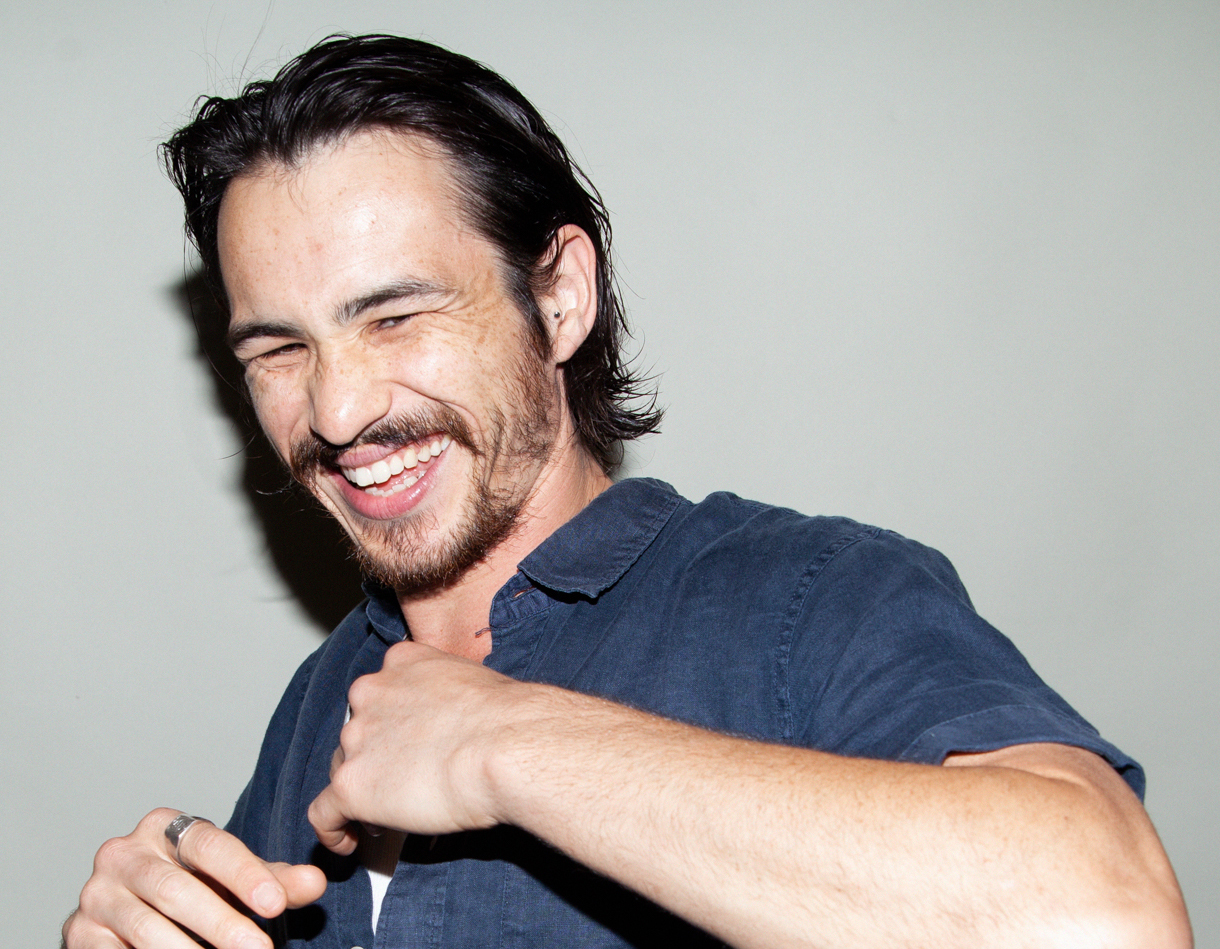
The letter below is written by dancer Harrison Elliot to Mia Larsson, Head of the Dance Department at Riksteatern.
Subscribe to our newsletter to get the letters directly to your inbox every month.
Dear Mia,
I’m writing this letter to you from Malmö where we are about to perform at Inkonst with Halla Ólafsdóttir’s work – Sylph. Touring this work to Geneva, and now Malmö, has made me remember an enjoyable aspect of touring – flexibility. But rather than this being a measurement of how far your leg might go somewhere, it has more to do with the adaptability needed to take a work into different venues. To give you an example, the audience’s seats fold forward. So what? To most other works this would be inconsequential, but when you’ve previously used solid (i.e. not folding) seats to gracefully clamber over an audience while rippling and heavy-breathing the rhythm of a Celine Dion song, it means you have to reconsider your techniques for climbing through that crowd without breaking a chair, an audience member or yourself…
Now this is a very particular example, but it none-the-less requires time and consideration. Just as plotting the serpentine track to return side-stage after passing through the audience, foyer and backstage tunnels. Just as recalibrating the performative intensity for an audience a few feet away or a few meters away. It requires flexibility.
To borrow a word from the context of Sylph, you could say it’s a form of shapeshifting – an act that permits many forms without sacrificing the integrity of the core. Perhaps that’s a nice segue to address one of Joel’s questions regarding my thought on the relationship between ‘dancer’ and ‘choreographer’.
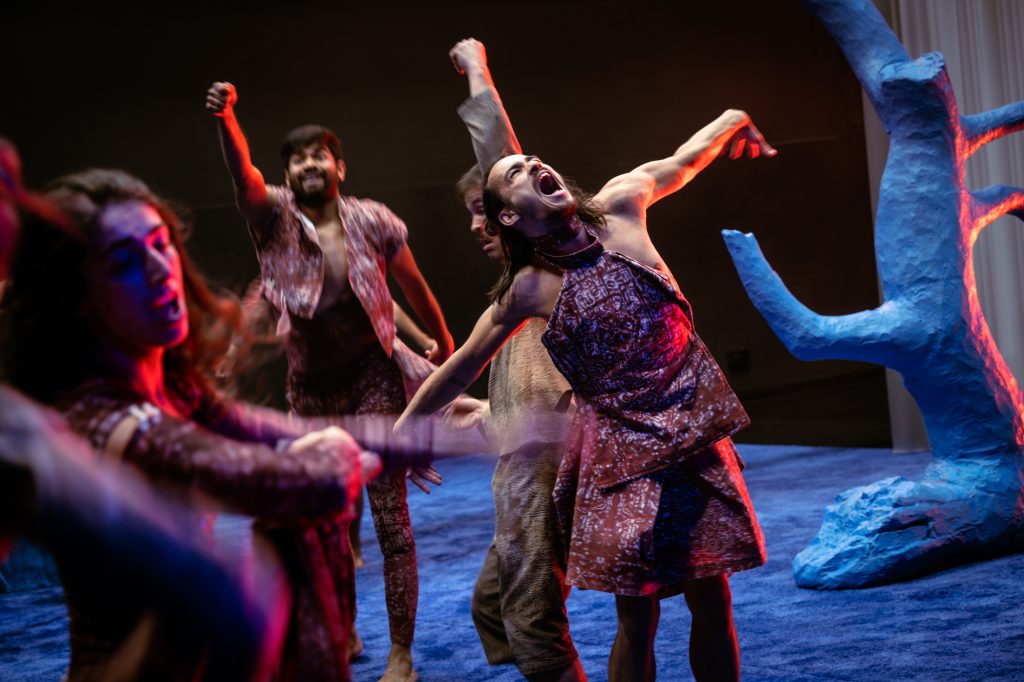
Just like taking established works on tour to different venues, flexibility is needed as a base for the relationship between someone taking artistic lead of a process and those who contribute to the creation. Flexibility can take many forms, too many to name here, but I can say for certain that flexibility doesn’t come from holding on to something too tightly, but rather from a respect for and trust in the people and the space to achieve something. I think the body’s fascial system is a good analogy for this; if the fascia is too tight it mars the movement and function of the body (the work / the performance / the process) – stunting the possibilities of ‘shapeshifting’. But when the body is available to support the structure then obstacles become moments that can enhance or illuminate aspects of an event’s function. Maybe I’m getting lost in my analogy here, but what I’m getting at is that trust and collaboration between parties – be that the space & the performance or the choreographer & the dancers – can allow an openness where a creative vision is able to flourish, even in unexpected ways.
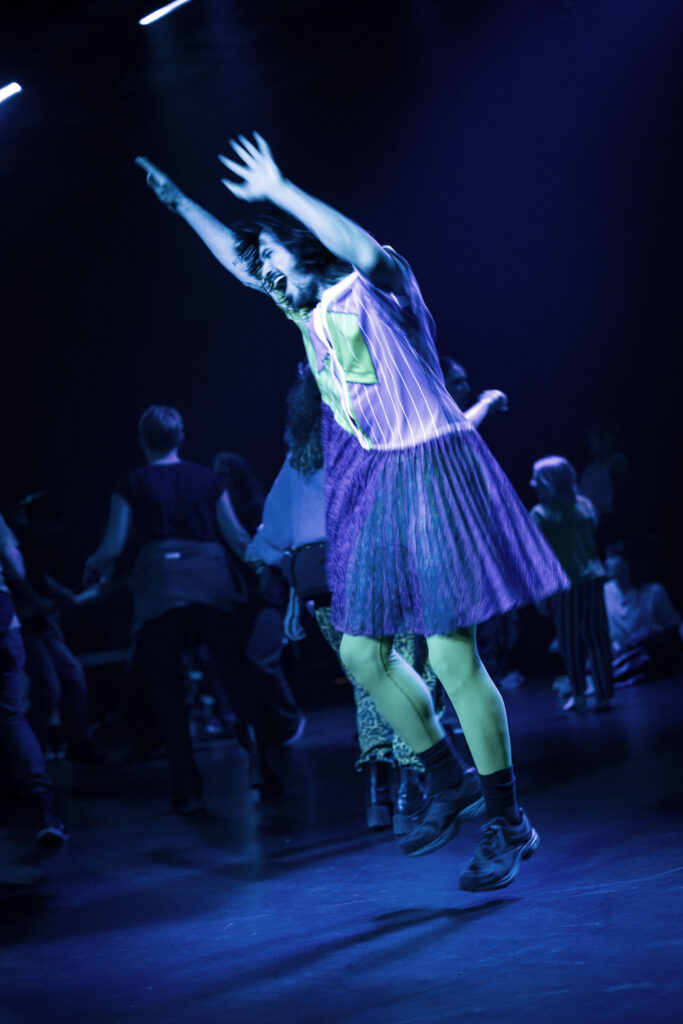
This also makes me reflect on how openness and flexibility are values that I try to bring with me for each new creation period. The start of a new process is a beautifully energetic period. It’s the moment where the choreographer and artistic team begin forging a creative alchemy with the materials they possess. In a way, it’s like making a clay sculpture in the dark. The more you work the clearer the form and details become, and often, when the light is turned on, the result is something different to how you initially predicted. Personally, I trust that when all parties can give space for trying and not knowing, can run with unexpected results, and can soften hard expectations, the process will yield what is needed for the vision and there can be greater depth for what is present and willing.
Maybe this all sounds a little too esoteric. Perhaps this appears blatantly obvious. But Mia, I work so much with analogies and in writing this to you I can’t help myself. How do you encorporate flexibility in your role as Head of the Dance Department at Riksteatern? How do you negotiate the needs and desires of many different people and artists to create a vision?
I wish you the best and look forward to reading your reply.
/Harrison